You check on your sleeping child and hear an unmistakable scraping or grinding sound coming from their mouth.
It can be alarming.
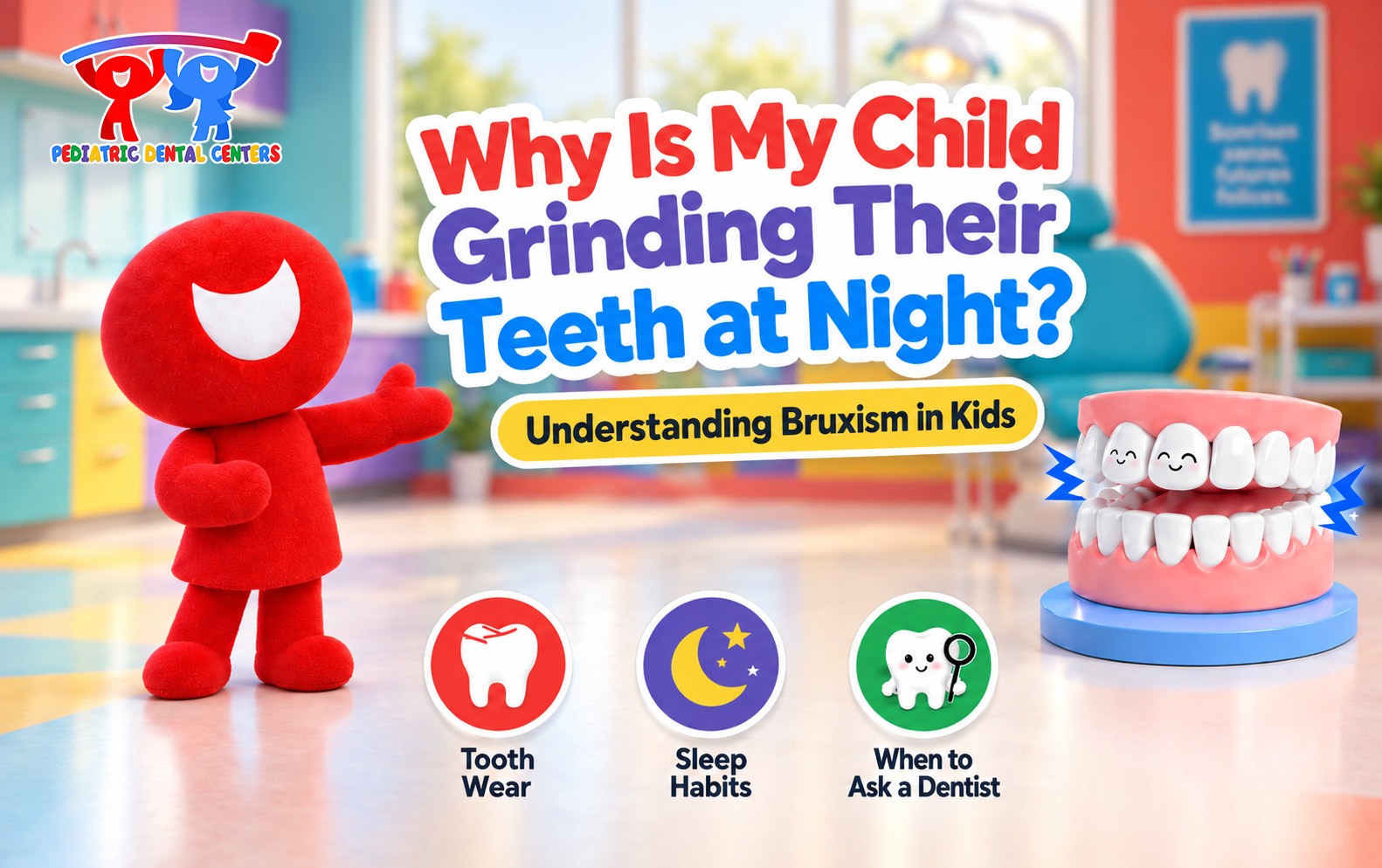
The medical and dental term for grinding or clenching the teeth is bruxism. It can occur while a child is awake or asleep, but parents frequently first discover it because they hear their child grinding at night.
Bruxism is recognized as an oral habit that can occur in children. (AAPD)
For many children, occasional grinding does not result in significant dental problems. However, persistent or severe grinding deserves evaluation, particularly when accompanied by other symptoms.
What Causes Teeth Grinding in Children?
There isn’t always one identifiable cause.
Bruxism can be influenced by multiple factors, and what triggers grinding in one child may be different in another.
Potential associations can include:
Stress or emotional factors: Changes in routine, anxiety, school pressures or other emotional stressors may coincide with increased clenching or grinding in some children.
Sleep-related factors: Because many episodes occur during sleep, persistent grinding may warrant questions about the child’s sleep quality and other nighttime symptoms.
Dental development: A child’s bite changes substantially as baby teeth are lost and permanent teeth erupt. The mixed-dentition period generally extends from approximately ages six through 13. (AAPD)
Individual habits: Some children simply develop clenching or grinding behaviors without an obvious underlying cause.
The presence of bruxism does not automatically establish any one diagnosis. Evaluation should consider the child’s complete history and symptoms rather than assuming that the grinding has a single cause.
How Can I Tell if My Child Is Grinding Their Teeth?
The most obvious indication may be the sound itself.
Parents sometimes hear grinding from another room even though the child has no idea that it is happening.
Other possible signs include:
- Flattened or worn chewing surfaces
- Chipped or damaged teeth
- Tooth sensitivity
- Jaw discomfort
- Facial muscle soreness
- Morning headaches
- Complaints about teeth hurting without an obvious cavity
- A parent or sibling repeatedly hearing grinding during sleep
Some children grind their teeth without experiencing any noticeable symptoms.
Can Grinding Damage Baby Teeth?
It can.
Persistent or significant grinding may wear down tooth structure. The amount of wear varies considerably among children.
This is one reason pediatric dentists evaluate oral habits as part of a child’s ongoing dental care. The AAPD recognizes bruxism among oral habits capable of applying forces to the teeth and surrounding structures. (AAPD)
The pediatric dentist can determine whether the amount of wear appears consistent with normal developmental changes or warrants closer monitoring or intervention.
Does My Child Need a Night Guard?
Not every child who grinds their teeth needs a night guard.
This is particularly important in growing children. Their jaws are developing, baby teeth are being lost, and permanent teeth are erupting.
An appliance that might be appropriate for an adult should not automatically be assumed to be appropriate for a child.
Treatment decisions should consider the child’s age, dental development, symptoms, severity of tooth wear and underlying contributing factors.
For some children, monitoring may be appropriate. For others, intervention or referral may be recommended.
What About Grinding and Sleep Problems?
Parents should mention other nighttime symptoms to their child’s healthcare providers.
For example, tell the pediatric dentist and pediatrician if grinding occurs together with symptoms such as:
- Frequent or loud snoring
- Mouth breathing during sleep
- Restless sleep
- Repeated nighttime awakenings
- Unusual breathing patterns
- Significant daytime sleepiness
- Morning headaches
These symptoms do not mean that grinding is necessarily caused by a sleep disorder. They are simply important pieces of information that can help determine whether further evaluation is appropriate.
Can Stress Cause a Child to Grind Their Teeth?
Stress may contribute to bruxism in some children, but parents should avoid assuming that stress is always responsible.
If you notice that grinding becomes more pronounced during periods of change or anxiety, mention the pattern during your child’s dental examination.
It can also be helpful to maintain a consistent bedtime routine and adequate sleep schedule.
When Should I Bring My Child to the Dentist?
A dental examination is appropriate if you notice persistent grinding, particularly if your child has:
Visible tooth wear: Teeth appear increasingly flat, shortened or damaged.
Pain: Your child complains about jaw, facial or tooth discomfort.
Sensitivity: Hot, cold or pressure causes discomfort.
Headaches: Particularly recurrent morning headaches associated with jaw discomfort.
Broken or chipped teeth: Grinding appears to be damaging the teeth.
Sleep-related symptoms: Grinding occurs with significant snoring, breathing concerns or poor-quality sleep.
A pediatric dentist can examine the teeth and bite, document any wear, assess the child’s stage of dental development and determine whether observation or treatment is appropriate.
What Will the Pediatric Dentist Do?
The evaluation may include a review of your child’s medical and dental history, sleep symptoms and any complaints of pain.
The dentist will examine the teeth for evidence of wear or damage and evaluate the bite and developing dentition.
Depending upon the findings, recommendations may range from observation to dental treatment or consultation with another healthcare professional.
The objective is not simply to stop a noise at night. It is to determine whether the grinding is affecting your child’s teeth or is associated with another issue that deserves attention.
Should Parents Be Worried?
Hearing your child grind their teeth can sound much worse than the actual dental effects.
The key is determining whether the behavior is occasional and harmless or persistent enough to cause tooth wear, discomfort or other problems.
Rather than trying an over-the-counter adult night guard or assuming that the grinding will disappear on its own, mention it at your child’s dental examination.
The Bottom Line
Teeth grinding is something pediatric dentists encounter regularly. Many children can simply be monitored, while children with significant wear, pain or accompanying symptoms may require additional evaluation.
Pediatric Dental Centers provides comprehensive pediatric dental and orthodontic care throughout Miami-Dade and Broward County. If your child is grinding or clenching their teeth—especially if you notice tooth wear, discomfort, headaches or sleep-related symptoms—schedule an evaluation with one of our pediatric dentists.