Your baby’s first tooth is an exciting milestone—and the beginning of an important daily routine. Caring for baby teeth helps prevent cavities, supports eating and speech development, and creates habits that can last a lifetime. This guide explains how to brush baby and toddler teeth safely from infancy through age four.
When Should You Start Brushing a Baby’s Teeth?
Begin brushing as soon as your baby’s first tooth appears. Before teeth erupt, you may gently wipe the gums with a clean, damp washcloth or soft gauze after feedings.
Use a small toothbrush designed for infants, with a compact head and soft bristles. Brush twice each day—once in the morning and again before bedtime. The nighttime brushing is especially important because plaque and sugars should not remain on the teeth while your child sleeps.
Children should establish a dental home by their first birthday or within six months after the first tooth erupts. An early visit allows the pediatric dentist to evaluate tooth development, feeding habits, fluoride exposure, and cavity risk. Parents can also review our guide to your child’s first dental visit.
Should Babies and Toddlers Use Fluoride Toothpaste?
Yes. Fluoride strengthens enamel and helps prevent tooth decay. The American Academy of Pediatric Dentistry recommends brushing young children’s teeth twice daily with an age-appropriate amount of fluoride toothpaste.
The amount—not a toothbrush-length strip—is the key:
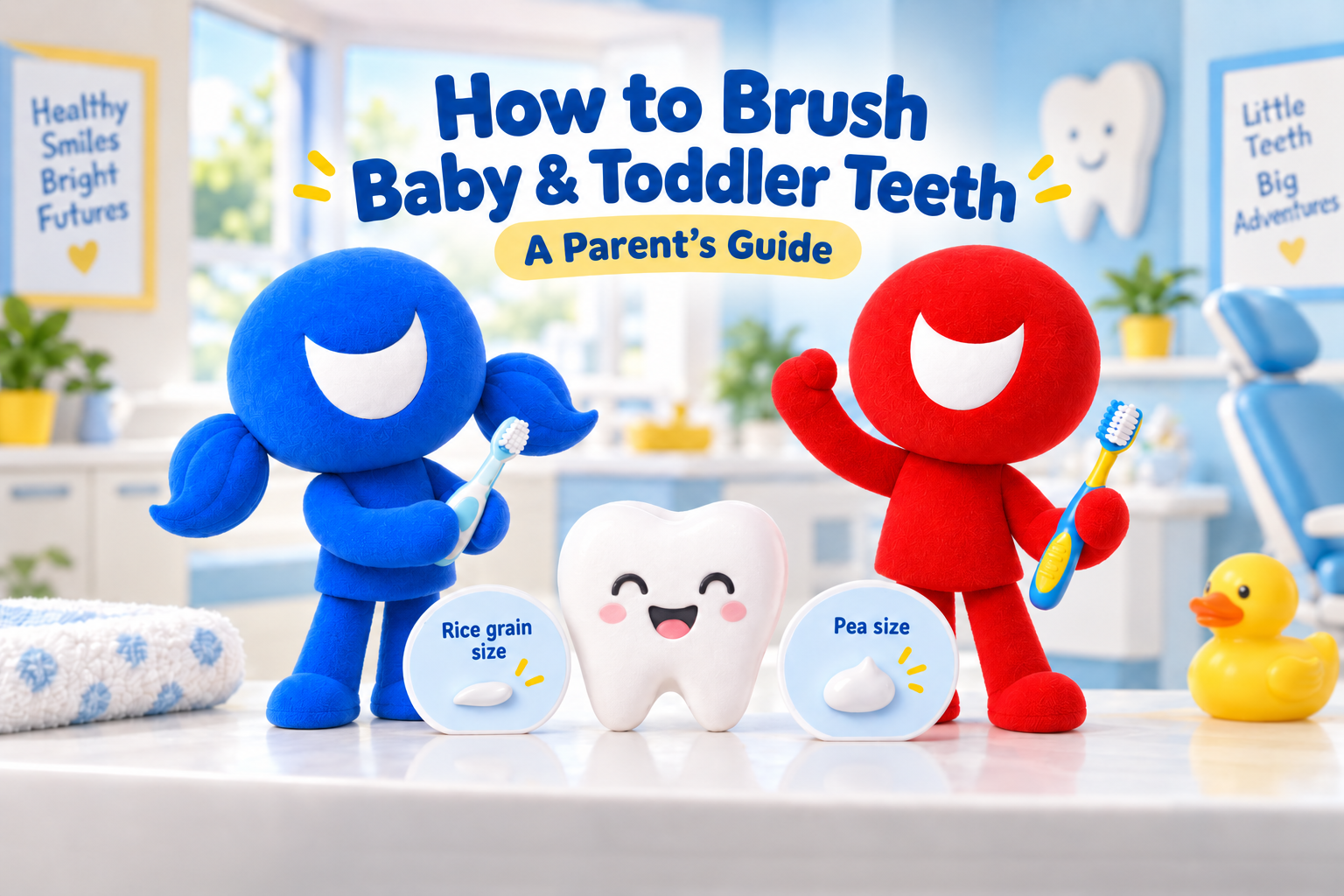
- From the first tooth until age three: Use a tiny smear no larger than a grain of rice.
- From ages three through six: Use a pea-sized amount.
Parents should dispense the toothpaste and supervise brushing. Encourage your child to spit when developmentally able, but do not rinse with large amounts of water afterward.
For more information about professional cavity prevention, read about the benefits of fluoride varnish for children.
How to Brush Your Baby or Toddler’s Teeth
Choose a position that gives you a clear view and supports your child’s head. A baby can lie on the caregiver’s lap. For a toddler, stand behind the child and gently tilt the head backward against your body.
Follow these steps:
- Place the correct amount of fluoride toothpaste on a soft, child-sized toothbrush.
- Lift the lips so you can see the gumline, including the upper front teeth.
- Use small, gentle circles to brush the outside, inside, and chewing surfaces.
- Pay special attention to the gumline and back molars, where plaque often remains.
- Brush for approximately two minutes, twice daily.
- Help your child spit when able, and keep the toothpaste out of reach afterward.
Persistent bleeding, swelling, pain, or unusual lesions should be evaluated by a pediatric dentist.
When Should You Start Flossing a Child’s Teeth?
Start flossing once daily when any two teeth touch and the toothbrush cannot clean between them. Young children lack the coordination to brush or floss thoroughly, so an adult should complete the cleaning afterward.
What If Your Toddler Refuses to Brush?
Resistance is common. Keep the routine calm, predictable, and brief. Helpful strategies include:
- Letting your child select an age-appropriate toothbrush.
- Brushing together so your child can imitate you.
- Using a two-minute song or visual timer.
- Offering two choices, such as “blue toothbrush or green toothbrush?”
- Letting the child brush first, followed by the parent’s turn.
- Praising cooperation immediately afterward.
Avoid threatening your child with the dentist. Pediatric dental visits should be described positively so the dental office remains a safe and welcoming place.
Daily Habits That Help Prevent Toddler Cavities
Brushing is essential, but feeding patterns also affect cavity risk. Avoid putting a baby or toddler to bed with a bottle or sippy cup containing milk, formula, juice, or another sweetened beverage. Frequent exposure allows cavity-causing bacteria to produce acid repeatedly throughout the day and night. Water is the safest bedtime drink after brushing.
Limit frequent grazing and sugary or sticky snacks. Offer water between planned meals and snacks, and choose nutrient-rich foods. Learn more in our parent’s guide to children’s nutrition and dental health.
Examine the teeth regularly. White, chalky areas near the gumline can indicate early enamel damage. Brown spots, holes, sensitivity, or pain require professional evaluation. Early childhood cavities can progress quickly. Our guide to baby bottle tooth decay explains additional warning signs.
Building Healthy Smiles from the First Tooth
The best oral-health routine for children ages one through four is simple: brush twice daily with the correct amount of fluoride toothpaste, floss wherever teeth touch, limit frequent sugar exposure, and maintain regular pediatric dental visits.
At Pediatric Dental Centers, our team helps families make home care practical and appropriate for each child’s age and cavity risk. We support children from the first tooth through every stage of their growing smile.
Schedule your child’s appointment today and give them a healthy start that can last a lifetime.
Frequently Asked Questions
How many times a day should I brush my toddler’s teeth?
Brush twice daily: once in the morning and once before bedtime. The bedtime brushing should happen after the child’s final food or drink other than water.
How much toothpaste should a two-year-old use?
Use a smear of fluoride toothpaste no larger than a grain of rice. At age three, increase to a pea-sized amount.
Is it safe if my toddler swallows a little toothpaste?
Young children commonly swallow small amounts because they have not learned to spit. Using only the recommended rice-sized smear limits ingestion. Store toothpaste where children cannot dispense it themselves.
At what age can children brush their own teeth?
Children can participate early, but parents should perform or supervise brushing until the child can clean every surface reliably.