Skip to content

Kids Braces & Orthodontics in Miami

Affordable kids braces, Invisalign, and early orthodontic treatment in South Florida.

Looking for braces near me in Miami? At Pediatric Dental Centers, we offer expert orthodontic care for kids and teens, including metal braces and Invisalign options tailored to every smile.

Braces for Kids and Teens in Miami

Why Families Choose Us for Kids Braces in Miami.

Families searching for braces near them trust Pediatric Dental Centers for affordable braces, Invisalign treatment, and expert pediatric orthodontic care across South Florida.

Braces for Teens

From classic metal braces to trendy gold brackets, we offer customizable options that let teens express their style while building confidence.

Clear Aligners & Invisalign for Teens

Clear aligners are now available as a modern, discreet option to help teens straighten their smiles comfortably and confidently.

Orthodontic treatment improves the alignment of teeth and jaws, helping prevent future dental problems, boost self-confidence, and support long-term oral health.

We Accept Medicaid & PPO Plans for Braces & Orthodontic Care

Ready to Get Braces Near Me in Miami?

In addition to traditional braces, there are other orthodontic treatments available, such as clear aligners and expanders. Our orthodontists will be able to recommend the best treatment option for your child based on their specific needs.

Orthodontics & Braces - FAQ

The American Association of Orthodontists recommends that children receive an orthodontic evaluation by age 7.

At this age, enough permanent teeth have usually erupted to identify developing bite and jaw problems, even if braces are not yet needed.

Early evaluation does not necessarily mean early treatment.

By age 7, orthodontists can often identify:

  • Crowding
  • Crossbites
  • Underbites
  • Overbites
  • Jaw growth discrepancies
  • Eruption problems
  • Harmful oral habits
  •  

Early detection may allow certain problems to be corrected more easily.

No. Many children never require orthodontic treatment, while others may benefit significantly from braces or other orthodontic appliances.

A professional evaluation is the best way to determine your child’s needs.

Common signs include:

  • Crowded teeth
  • Crooked teeth
  • Gaps between teeth
  • Difficulty biting or chewing
  • Underbite
  • Overbite
  • Crossbite
  • Mouth breathing
  • Thumb sucking habits
  • Early or late loss of baby teeth
  •  

An orthodontic evaluation can determine whether treatment is recommended.

Phase I treatment, also called early interceptive orthodontics, occurs while some baby teeth are still present. The goal is to guide jaw growth, improve bite relationships, and create space for erupting permanent teeth.

Not all children require Phase I treatment.

Phase I treatment may be recommended for:

  • Crossbites
  • Severe crowding
  • Underbites
  • Narrow upper jaws
  • Harmful oral habits
  • Certain eruption problems
  •  

Early intervention can sometimes reduce the complexity of future treatment.

Phase II treatment generally begins after most or all permanent teeth have erupted.

This phase typically involves comprehensive braces or aligner therapy designed to create a healthy, functional, and attractive smile.

Most children begin comprehensive orthodontic treatment between ages 10 and 14, although treatment timing varies depending on the child’s growth and dental development.

Treatment time varies considerably.

Most comprehensive orthodontic treatment lasts between 12 and 30 months depending on:

  • Complexity of the case
  • Growth patterns
  • Patient cooperation
  • Appointment compliance
  •  

Your orthodontist will provide an individualized estimate.

Braces do not typically hurt during placement.

Some temporary soreness may occur for a few days after:

  • Initial placement
  • Adjustments
  • Appliance changes
  •  

Most children adapt quickly.

Foods commonly avoided include:

  • Hard candy
  • Ice
  • Popcorn
  • Nuts
  • Sticky candy
  • Caramel
  • Chewing gum
  •  

Following dietary recommendations helps prevent broken brackets and treatment delays.

Most orthodontic adjustment appointments occur every 4 to 10 weeks depending on the stage of treatment.

Appointment intervals vary among patients.

Contact our office to schedule an evaluation.

Some broken brackets require prompt repair, while others can safely wait until the next scheduled appointment.

Our team will advise you based on the situation.

An overbite occurs when the upper front teeth excessively overlap the lower front teeth vertically.

Mild overbites are common, but severe overbites may require orthodontic correction.

An underbite occurs when the lower teeth extend in front of the upper teeth.

This condition may affect:

  • – Appearance
  • – Chewing
  • – Speech
  • – Jaw development
  •  

Early evaluation is often important.

A crossbite occurs when some upper teeth bite inside the lower teeth rather than outside.

Crossbites can affect jaw growth and tooth wear and often benefit from early treatment.

Crowding occurs when there is insufficient space for teeth to align properly.

Crowding is one of the most common reasons children require orthodontic treatment.

Spacing refers to gaps between teeth.

While some spacing is normal during development, excessive spacing may require orthodontic evaluation.

A palatal expander is an orthodontic appliance used to widen the upper jaw.

Expansion may improve:

  • – Crossbites
  • – Crowding
  • – Jaw development
  • – Airway space in selected cases

Expansion is generally most effective while children are still growing.

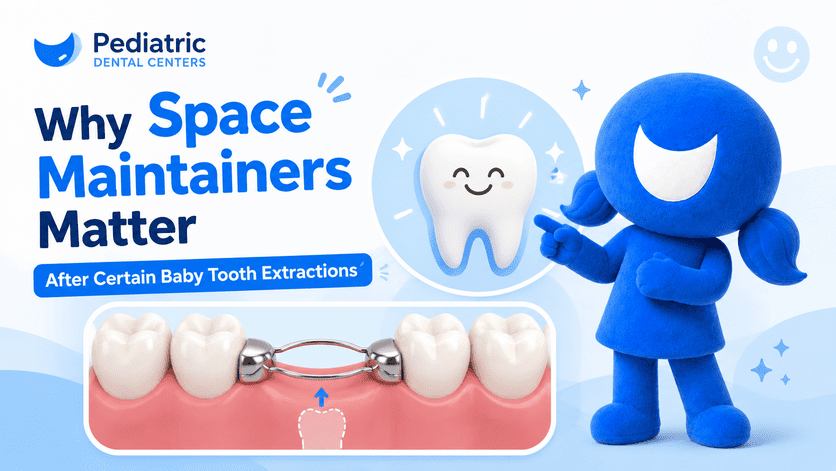
A space maintainer is an appliance used when a baby tooth is lost prematurely.

It helps preserve space for the future permanent tooth and may reduce orthodontic complications.

Yes. Prolonged thumb sucking can contribute to:

  • – Open bites
  • – Overjets
  • – Jaw development changes
  • – Tooth alignment problems
  •  

Early intervention may help minimize these effects.

Clear aligners are removable orthodontic trays that gradually move teeth into proper position.

Not all children are candidates for aligner treatment.

An orthodontic evaluation can determine whether aligners are appropriate.

In many cases, yes. However, treatment effectiveness depends on:

  • – The complexity of the orthodontic problem
  • – Patient compliance
  • – Treatment goals

Some cases are better suited for traditional braces.

Most aligner systems require approximately 20 to 22 hours of daily wear to achieve optimal results.

Poor compliance can prolong treatment.

Medicaid may cover orthodontic treatment when strict medical necessity criteria are met.

Coverage is generally based on:

  • – Severity of the malocclusion
  • – Functional impairment
  • – Documentation requirements established by the insurance carrier
  •  

*Not every child qualifies for Medicaid-covered orthodontics.

An orthodontic evaluation is required.

Records may include:

  • – Clinical examination
  • – Photographs
  • – Radiographs
  • – Diagnostic measurements
  •  

The insurance company makes the final determination regarding eligibility.

A denial does not necessarily mean your child would not benefit from treatment.

It simply means the case did not meet the insurance carrier’s current medical necessity requirements.

Parents may:

  • – Seek a second opinion
  • – Discuss alternative treatment plans
  • – Consider private-pay treatment options

Certain bite and jaw discrepancies may contribute to speech difficulties.

Orthodontic evaluation may be recommended when dental alignment affects speech development.

Many children and teenagers experience increased confidence after orthodontic treatment because of improvements in smile appearance and dental function.

However, the primary goals of orthodontics remain oral health, function, and long-term stability.

After active treatment, retainers are typically prescribed to help maintain the results achieved through orthodontic treatment.

Failure to wear retainers as instructed can allow teeth to shift.

Retention recommendations vary. Many orthodontic patients benefit from long-term retainer use to help preserve treatment results.

Your orthodontist will provide individualized instructions.

Yes. Teeth naturally tend to shift throughout life.

Retainers help maintain orthodontic results and reduce unwanted tooth movement.

Early evaluation allows orthodontists to:

  • – Identify developing problems
  • – Monitor growth
  • – Determine ideal treatment timing
  • – Potentially reduce treatment complexity
  •  

Even when no treatment is needed, early monitoring can be beneficial.

Pediatric Dental Centers provides comprehensive orthodontic evaluations and treatment planning in a child-focused environment.

Our team works closely with families to monitor growth, identify orthodontic concerns early, and develop individualized treatment recommendations that support healthy dental development.

Orthodontic Insurance & Authorizations - FAQ

Authorization timelines vary depending on the insurance carrier.

Most decisions are made after submission of diagnostic records and review of medical necessity criteria.

Records may include:

  • – Photographs
  • – Panoramic X-rays
  • – Clinical examination
  • – Measurements
  • – Diagnostic documentation required by the insurance carrier

For insurance-covered treatment, authorization is typically required before treatment begins.

Private-pay treatment options may be discussed separately.

Pediatric Dental Centers provides orthodontic evaluations, early orthodontic treatment, braces, growth monitoring, and bite correction services for children and adolescents throughout Miami-Dade and Broward County.

Most children should receive an orthodontic evaluation by age 7, even if braces are not immediately needed. Early evaluation allows potential concerns to be identified and monitored during growth and development.

Yes. Eligible patients may qualify for Medicaid-covered orthodontic treatment when medical necessity criteria established by the insurance carrier are met.

Blog posts

Want more about Pediatric Dental Center?

Baby Bottle Tooth Decay: What Every Parent Needs to Know

Baby Bottle Tooth Decay: What Every Parent Needs…

Baby bottle tooth decay, also called Early Childhood Caries (ECC), is one of the most common dental problems in infants and toddlers. Cavities can develop…

Why Dental X-Rays Are Important and Safe for Children

Why Dental X-Rays Are Important and Safe for…

As parents, we all want to protect our children and make the best decisions for their health. One of the most common questions we hear…

Game Plan for a Winning Smile: Free Braces, Aligners & Wisdom Teeth Consultations in West Kendall

Game Plan for a Winning Smile: Free Braces,…

World Cup season is all about teamwork, confidence, and making the right moves at the right time. The same is true for your child’s smile.…

In which location would you like to schedule your appointment?

The patients we see range in age from 6 months to 20 years old.