As a parent, you do everything possible to keep your child healthy. You encourage good eating habits, schedule regular checkups, and remind them to brush their teeth every day. But did you know there is a quick, painless treatment that can dramatically reduce your child’s risk of developing cavities?
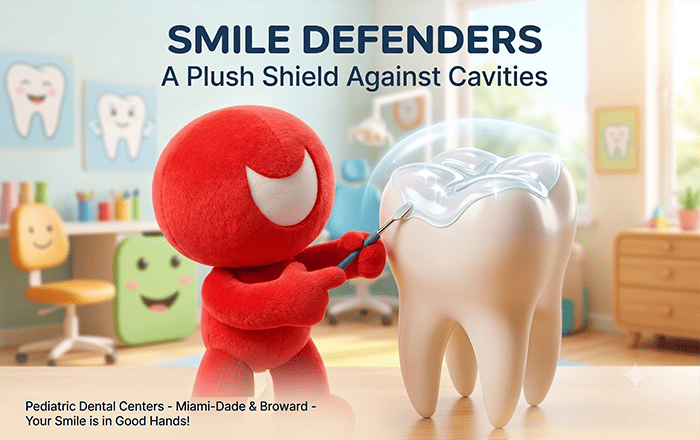
Dental sealants are one of the most effective preventive treatments available in pediatric dentistry. In fact, they are often referred to as a “protective shield” for children’s teeth because they help stop cavities before they start.
At Pediatric Dental Centers, we believe prevention is the key to maintaining healthy smiles for life. Our board-certified pediatric dentists recommend dental sealants for many children because they provide an extra layer of protection during the years when kids are most vulnerable to tooth decay.
If you’ve ever wondered what dental sealants are, how they work, or whether your child needs them, this guide will answer your questions.
What Are Dental Sealants?
Dental sealants are thin, protective coatings that are applied to the chewing surfaces of the back teeth, also known as molars and premolars.
These teeth have deep grooves and tiny pits that help us chew food. While these grooves are completely normal, they can also trap food particles, plaque, and bacteria. Even children who brush carefully may have difficulty cleaning these hard-to-reach areas.
A dental sealant acts like a protective barrier, covering these grooves and preventing bacteria from settling into the tooth and causing cavities.
Think of it as placing a shield over the most cavity-prone areas of your child’s teeth.
Why Are Molars More Likely to Get Cavities?
The back teeth do most of the work when chewing food. Because of their complex shape, they naturally collect more food debris and bacteria than other teeth.
The grooves on molars can be:
- Deep and narrow
- Difficult to clean with a toothbrush
- Prone to plaque buildup
- More susceptible to tooth decay
Even children who brush and floss regularly can develop cavities in these areas. This is why pediatric dentists often recommend sealants shortly after permanent molars erupt.
Research has consistently shown that the chewing surfaces of molars are among the most common places where cavities develop in children and adolescents.
How Do Dental Sealants Work?
Dental sealants work by sealing the grooves and pits where bacteria commonly hide.
Once applied, the sealant creates a smooth surface that:
- Prevents food particles from becoming trapped
- Reduces plaque accumulation
- Makes brushing more effective
- Protects the tooth from cavity-causing bacteria
- Helps prevent tooth decay before it begins
The sealant acts as a physical barrier between the tooth enamel and the acids produced by bacteria. By blocking bacteria from settling into vulnerable grooves, sealants significantly reduce the likelihood of cavities developing.
Are Dental Sealants Effective?
Absolutely.
Dental sealants are among the most successful preventive treatments in modern dentistry.
Studies have shown that sealants can reduce the risk of cavities in molars by up to 80% during the first several years after placement. Children who receive dental sealants are significantly less likely to develop cavities than those who do not.
This means:
- Fewer fillings
- Less discomfort
- Fewer dental emergencies
- Lower dental costs over time
- Better long-term oral health
Preventing cavities before they occur is always preferable to treating them later. Dental sealants help children avoid unnecessary procedures while protecting their growing smiles.
When Should Children Get Dental Sealants?
Timing is important.
The best time to place dental sealants is shortly after the permanent molars come in.
First Permanent Molars
Most children get their first permanent molars around ages 6 to 7.
Second Permanent Molars
Most children get their second permanent molars around ages 11 to 13.
Applying sealants soon after these teeth erupt provides protection before cavities have a chance to develop.
Some children may also benefit from sealants on additional teeth depending on their individual risk for tooth decay.
Your pediatric dentist can determine which teeth should be protected and when treatment is recommended.
What Happens During the Sealant Procedure?
One of the biggest advantages of dental sealants is how quick and easy the procedure is.
The treatment is:
- Completely painless
- Non-invasive
- Safe
- Fast
- Comfortable for children
There are no needles, no drilling, and no numbing required.
Step 1: Cleaning the Tooth
The tooth is cleaned thoroughly to remove any plaque or debris.
Step 2: Preparing the Surface
A special conditioning solution is applied briefly to help the sealant bond securely to the tooth.
Step 3: Applying the Sealant
The liquid sealant material is carefully painted onto the chewing surface.
Step 4: Hardening the Sealant
A special curing light hardens the material within seconds.
Once completed, the tooth is immediately protected and ready for normal chewing.
Most children find the procedure easy and stress-free.
How Long Do Dental Sealants Last?
Dental sealants can provide protection for several years.
During your child’s routine dental checkups, the pediatric dentist will examine the sealants to ensure they remain intact and effective.
If a sealant becomes worn or chipped, it can usually be repaired or replaced quickly.
Regular preventive visits help ensure your child’s sealants continue protecting their teeth throughout childhood and adolescence.
Are Dental Sealants Safe?
Yes.
Dental sealants have been safely used in pediatric dentistry for decades and are supported by extensive scientific research.
Major health organizations, including the American Dental Association and the American Academy of Pediatric Dentistry, recommend sealants as a safe and effective method for preventing cavities.
Parents can feel confident knowing that dental sealants are a trusted preventive treatment used by pediatric dentists throughout the United States.
Do Sealants Replace Brushing and Flossing?
No.
Dental sealants are designed to work alongside good oral hygiene habits—not replace them.
Children should still:
- Brush twice daily with fluoride toothpaste
- Floss every day
- Eat a balanced diet
- Limit sugary snacks and beverages
- Visit the dentist regularly
Sealants protect the chewing surfaces of teeth, but every other area of the mouth still requires proper cleaning and care.
The best protection against cavities comes from combining sealants, fluoride, healthy habits, and regular dental visits.
Why South Florida Parents Choose Dental Sealants
Families throughout Miami-Dade and Broward County are increasingly choosing dental sealants because they provide an extra level of protection during the cavity-prone years of childhood.
For children in Miami, Homestead, Palmetto Bay, West Kendall, Miami Gardens, Miami Shores, Allapattah, Liberty City, North Lauderdale, and surrounding South Florida communities, sealants can play an important role in preventing dental problems before they start.
Preventive care is always easier, more comfortable, and less expensive than treating cavities after they develop.
By investing in prevention today, parents can help their children avoid dental problems and enjoy healthier smiles in the future.
Frequently Asked Questions About Dental Sealants
Can Sealants Be Placed on Baby Teeth?
In some cases, yes.
Children who are at higher risk for cavities may benefit from sealants on certain primary teeth, particularly if those teeth have deep grooves and are expected to remain in the mouth for several years.
Your pediatric dentist can determine whether sealants are appropriate for your child.
Does Insurance Cover Dental Sealants?
Many dental insurance plans cover dental sealants because they are considered preventive treatment.
Florida Medicaid programs and many commercial insurance plans often provide coverage for sealants on eligible permanent molars.
Our team can help verify your benefits and explain any coverage details before treatment.
Can My Child Eat After Receiving Sealants?
Yes.
Your child can typically return to normal eating and drinking immediately after the appointment.
The sealants are hardened during the procedure and are ready to function right away.
Are Sealants Visible?
Sealants are usually clear, white, or tooth-colored.
Most children and parents do not notice them during everyday activities, and they do not affect the appearance of the smile.
Can Cavities Still Develop Under Sealants?
While no treatment can guarantee complete protection, properly placed sealants significantly reduce the risk of cavities.
Regular dental examinations allow the dentist to monitor sealants and ensure they continue providing effective protection.
Do Sealants Hurt?
No.
The procedure is completely painless and does not require shots, drilling, or anesthesia.
Many children are surprised by how quick and easy the process is.
Protect Your Child’s Smile Before Cavities Start
Every parent wants to help their child avoid dental problems. Dental sealants offer a simple, painless, and highly effective way to protect growing teeth and reduce the risk of cavities.
By sealing the vulnerable grooves in molars, sealants help children maintain healthier smiles, avoid unnecessary dental treatment, and build a strong foundation for lifelong oral health.
At Pediatric Dental Centers, our board-certified pediatric dentists are committed to helping children throughout South Florida enjoy healthy, confident smiles. We proudly provide preventive dental care in a fun, welcoming, and child-friendly environment designed specifically for infants, children, teenagers, and patients with special healthcare needs.
Schedule Your Child’s Appointment Today
Wondering if your child is a candidate for dental sealants?
The team at Pediatric Dental Centers is here to help. During your child’s dental examination, we can evaluate their risk for cavities, discuss preventive treatment options, and determine whether dental sealants are recommended.
If you are looking for a trusted pediatric dentist in Miami, Homestead, Palmetto Bay, West Kendall, Miami Gardens, Miami Shores, Allapattah, Liberty City, North Lauderdale, or anywhere in South Florida, Pediatric Dental Centers is ready to help your child achieve a lifetime of healthy smiles.
Contact Pediatric Dental Centers today to schedule an appointment at one of our convenient South Florida locations and learn how dental sealants can help protect your child’s teeth from cavities before they start. Our board-certified pediatric dentists are committed to providing exceptional care in a fun, welcoming environment where children feel comfortable, parents feel confident, and healthy smiles thrive.