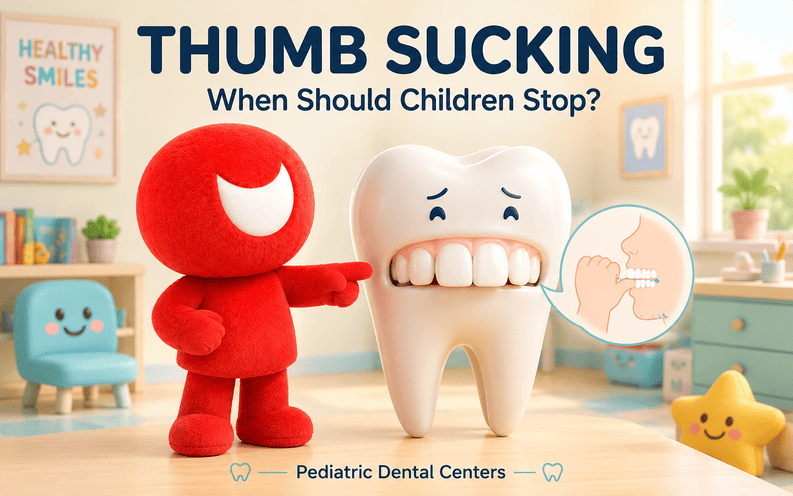
Thumb sucking is one of the most common childhood habits. Many babies begin sucking their thumb even before they are born, and for infants, it is completely normal. It provides comfort, helps babies self-soothe, and can make them feel secure during stressful situations or when falling asleep.
For most children, thumb sucking naturally decreases as they grow. However, when the habit continues beyond the toddler years, it can begin to affect the development of the teeth, jaws, and even speech.
One of the questions our pediatric dentists hear most often is:
“Is thumb sucking really that harmful?”
The answer depends on how often, how intensely, and how long a child sucks their thumb. While occasional thumb sucking during infancy is usually harmless, persistent thumb sucking after the permanent changes in the mouth begin to develop can lead to significant orthodontic problems.
At Pediatric Dental Centers, we help families throughout Miami Shores, Liberty City, Allapattah, West Kendall, Homestead, Palmetto Bay, Miami Gardens, North Lauderdale, and surrounding South Florida communities understand how thumb sucking affects oral development and how to help children break the habit before it causes lasting damage.
Let’s look at why stopping thumb sucking early is one of the best investments you can make in your child’s future smile.
Why Do Children Suck Their Thumb?
Thumb sucking is a completely natural reflex.
Babies suck their thumbs because it:
- Provides comfort
- Helps them relax
- Makes them feel safe
- Helps them fall asleep
- Reduces anxiety during unfamiliar situations
Many children stop on their own between 2 and 4 years of age, but others continue well into elementary school.
The longer the habit continues, the greater the chance it will affect oral development.
Why Thumb Sucking Is More Concerning Than Pacifier Use
Many parents assume thumb sucking is less harmful than using a pacifier.
In reality, the opposite is often true.
Unlike a pacifier, a thumb:
- Is always available
- Cannot be taken away
- May be sucked for longer periods
- Often creates stronger pressure against the teeth and palate
Because of this, prolonged thumb sucking frequently causes more severe dental changes than prolonged pacifier use.
How Thumb Sucking Changes the Growing Mouth
Children’s mouths are rapidly developing during the first several years of life.
Repeated pressure from the thumb can slowly reshape:
- The upper jaw
- The roof of the mouth (palate)
- The position of the front teeth
- The alignment of the bite
- Facial growth patterns
These changes happen gradually and often go unnoticed until the permanent teeth begin to erupt.
Common Dental Problems Caused by Thumb Sucking
Prolonged thumb sucking may lead to:
Open Bite
One of the most recognizable effects.
The upper and lower front teeth no longer touch when the child bites together.
This can make it difficult to:
- Bite food
- Chew properly
- Speak clearly
Protruding Front Teeth
Constant thumb pressure pushes the upper front teeth forward.
These teeth become:
- More prominent
- More likely to be injured
- More difficult to clean
- Less esthetic
Crossbite
Thumb sucking can narrow the upper jaw.
When this occurs, the upper teeth fit inside the lower teeth instead of outside them.
Crossbites often require orthodontic expansion to correct.
Narrow Upper Jaw
The thumb occupies space where the tongue should naturally rest.
Without normal tongue pressure, the upper jaw may not widen properly during growth.
Changes in Facial Development
Severe, prolonged thumb sucking can alter the normal growth pattern of the jaws and face.
Early intervention greatly reduces this risk.
Can Thumb Sucking Affect Speech?
Yes.
Children who continue sucking their thumb after their speech develops may have difficulty producing certain sounds.
Speech problems can include:
- Lisping
- Difficulty pronouncing S
- Difficulty pronouncing Z
- Difficulty pronouncing TH
- Difficulty positioning the tongue correctly
In some children, speech improves after the habit stops.
Others may benefit from speech therapy in addition to dental treatment.
Does Thumb Sucking Cause Cavities?
Thumb sucking itself does not directly cause cavities.
However, frequent thumb sucking can:
- Transfer bacteria into the mouth
- Irritate gum tissue
- Create conditions that make oral hygiene more difficult if teeth become misaligned
Keeping both the hands and teeth clean remains important.
When Should Thumb Sucking Stop?
Most pediatric dentists recommend the following timeline:
Birth to Age 2
Thumb sucking is generally considered normal.
No intervention is usually necessary.
Ages 2 to 3
Parents should begin encouraging children to reduce the habit.
Positive reinforcement works much better than punishment.
Before Age 4
Ideally, thumb sucking should stop before permanent dental changes develop.
Many children can stop with encouragement during this period.
Before Permanent Front Teeth Erupt
This is one of the most important milestones.
Permanent front teeth usually begin erupting around 6 years of age.
Continuing thumb sucking after this point significantly increases the risk of permanent bite problems.
How Parents Can Help Their Child Stop
Breaking the habit takes patience.
Here are strategies that often work well.
Understand the Trigger
Many children suck their thumb because they are:
- Tired
- Nervous
- Bored
- Anxious
- Falling asleep
Addressing the underlying emotion often helps reduce the habit.
Praise Success
Celebrate progress instead of focusing on setbacks.
Sticker charts, small rewards, and encouragement can be highly effective.
Avoid Punishment
Criticism, embarrassment, or punishment usually increases stress.
Stress often causes children to suck their thumb even more.
Create Bedtime Alternatives
Replace thumb sucking with comforting routines such as:
- Reading together
- Listening to calming music
- Holding a favorite stuffed animal
- Extra cuddling
Use Gentle Reminders
Many children suck their thumb without realizing it.
Gentle reminders are much more effective than constant scolding.
What If My Child Can’t Stop?
Some children develop a very strong thumb sucking habit.
If the habit continues despite consistent efforts, your pediatric dentist may recommend:
- Habit counseling
- Positive behavior techniques
- A habit reminder appliance in selected cases
- Early orthodontic evaluation if bite changes have already developed
These treatments are individualized and are only recommended when necessary.
Can the Teeth Correct Themselves?
In many children, yes.
If thumb sucking stops early enough, the growing jaws often have an excellent ability to recover naturally.
Minor bite changes frequently improve without orthodontic treatment once the habit ends.
The earlier the habit stops, the better the chance of spontaneous correction.
The Importance of Early Dental Visits
The American Academy of Pediatric Dentistry recommends that every child visit a pediatric dentist by their first birthday or within six months after the first tooth erupts.
Regular dental checkups allow your pediatric dentist to:
- Monitor jaw growth
- Evaluate bite development
- Detect early orthodontic concerns
- Provide guidance for stopping thumb sucking before permanent damage occurs
Preventive care is always easier—and less expensive—than correcting problems after they develop.
The Bottom Line
Thumb sucking is a normal part of infancy, but it should not become a long-term habit.
When thumb sucking continues beyond the toddler years, it can affect the alignment of the teeth, the shape of the jaws, speech development, and overall facial growth. Because a thumb is always available and often exerts stronger pressure than a pacifier, persistent thumb sucking can be particularly challenging to overcome and may have a greater impact on oral development.
With patience, encouragement, and guidance from your pediatric dentist, most children can successfully break the habit before lasting problems occur. Early action gives your child the best chance of developing a healthy bite and a confident smile.
Schedule Your Child’s Dental Visit at Pediatric Dental Centers
If your child still sucks their thumb, an early evaluation can help determine whether the habit is affecting their oral development.
At Pediatric Dental Centers, our board-certified pediatric dentists provide comprehensive preventive care, growth and development assessments, and personalized guidance to help children stop thumb sucking in a positive and supportive way. We proudly care for families in Miami Shores, Liberty City, Allapattah, West Kendall, Homestead, Palmetto Bay, Miami Gardens, North Lauderdale, and surrounding South Florida communities.
Our goal is to identify potential concerns early, protect your child’s developing smile, and reduce the need for future orthodontic treatment whenever possible.
Contact Pediatric Dental Centers today to schedule your child’s appointment and give them the healthiest possible start to a lifetime of confident smiles.