As parents, we all want to protect our children and make the best decisions for their health. One of the most common questions we hear at Pediatric Dental Centers is:
“Are dental X-rays really necessary for my child?”
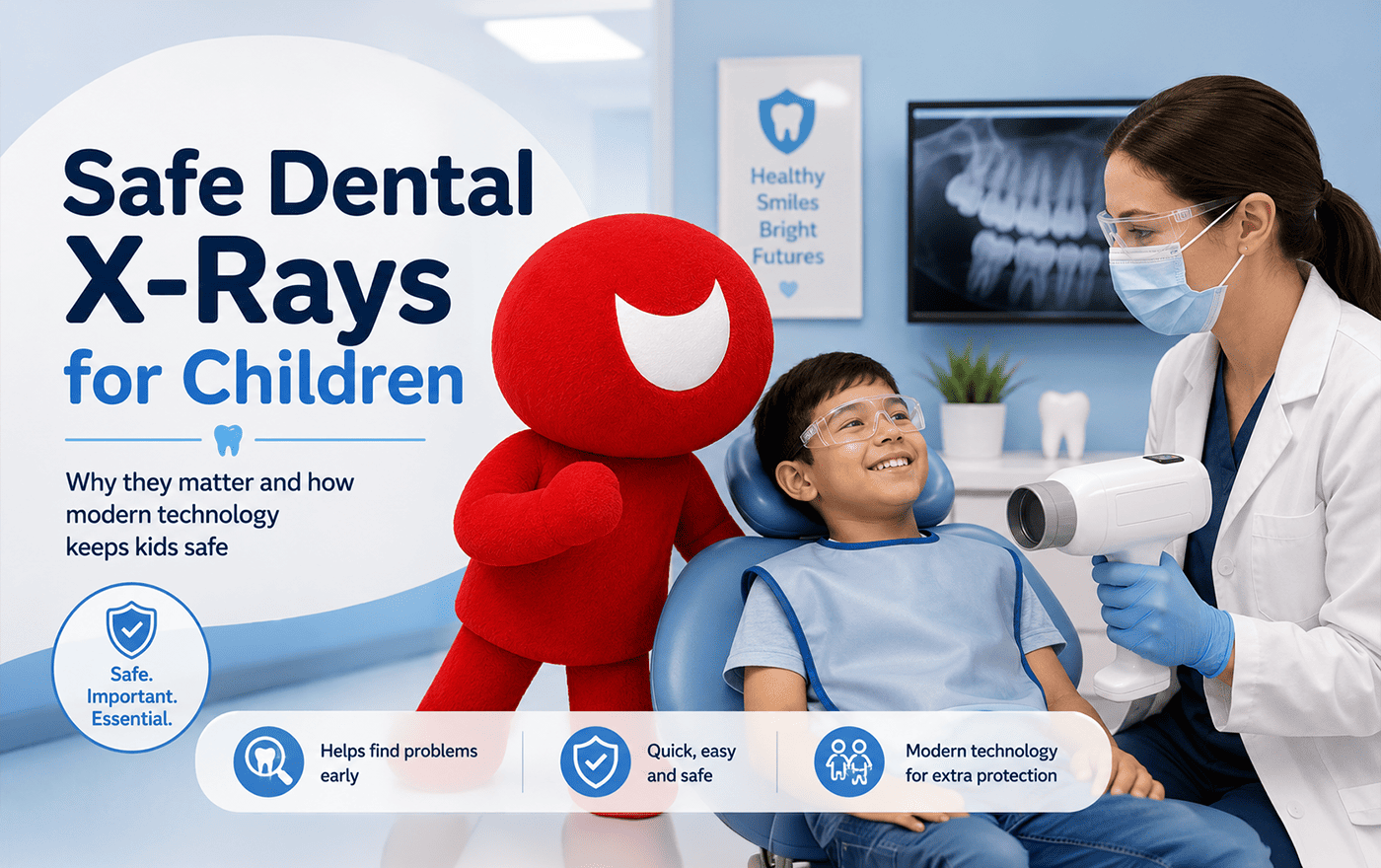
The answer is yes. Dental X-rays are one of the most valuable tools pediatric dentists use to monitor your child’s oral health, detect problems early, and prevent more extensive treatment in the future. Modern dental X-rays are also extremely safe, using very low levels of radiation and advanced technology designed specifically for children.
Let’s explore why dental X-rays are important, how they help your child, and why parents can feel confident about their safety.
What Are Dental X-Rays?
Dental X-rays, also called radiographs, are images that allow dentists to see areas of the teeth, gums, and jaw that cannot be seen during a visual examination alone.
Even when your child’s teeth look healthy from the outside, there may be hidden issues developing beneath the surface. X-rays provide a detailed view of:
- Areas between teeth
- Developing permanent teeth
- Bone surrounding the teeth
- Tooth roots
- Areas of infection
- Impacted teeth
- Orthodontic concerns
Without X-rays, many dental problems can go undetected until they become larger, more painful, and more expensive to treat.
Why Children Need Dental X-Rays
Children’s mouths change rapidly as they grow. Baby teeth fall out, permanent teeth develop, and jaw structures evolve throughout childhood and adolescence.
Because of these changes, pediatric dentists often rely on X-rays to monitor healthy development.
Detecting Cavities Early
One of the most important reasons for dental X-rays is finding cavities that cannot be seen during a routine examination.
Many cavities begin between teeth, where toothbrushes and visual inspections cannot easily detect them.
When cavities are identified early:
- Treatment is simpler
- Smaller fillings may be needed
- Pain can be prevented
- More extensive procedures can often be avoided
Early detection helps preserve healthy tooth structure and keeps children comfortable.
Monitoring Developing Teeth
X-rays allow pediatric dentists to see permanent teeth developing beneath the gums long before they appear in the mouth.
This helps identify:
- Missing permanent teeth
- Extra teeth
- Delayed eruption
- Teeth growing in the wrong position
- Potential crowding issues
Detecting these concerns early often allows for more effective treatment planning and may reduce future orthodontic complications.
Preventing Dental Emergencies
Many dental problems develop silently without causing symptoms.
A child may not experience pain until a cavity reaches the nerve or an infection becomes severe.
Routine X-rays help identify problems before they become emergencies, reducing the likelihood of:
- Toothaches
- Swelling
- Infections
- Emergency dental visits
- Premature tooth loss
Preventive care is always better than treating advanced disease.
How Often Does My Child Need X-Rays?
The frequency of dental X-rays depends on your child’s individual needs.
Factors include:
- Age
- Risk of cavities
- Previous dental history
- Oral hygiene habits
- Presence of orthodontic concerns
- Existing dental conditions
Some children may only need X-rays periodically, while others who are at higher risk for cavities may benefit from more frequent monitoring.
At Pediatric Dental Centers, we follow the recommendations of the American Academy of Pediatric Dentistry (AAPD) and only prescribe X-rays when they are clinically necessary.
Every child receives an individualized approach based on their oral health needs.
Are Dental X-Rays Safe for Children?
This is the question parents ask most often, and understandably so.
The good news is that modern dental X-rays are extremely safe.
Today’s digital X-ray technology uses significantly less radiation than older film-based systems.
In fact, the amount of radiation from dental X-rays is very small and comparable to everyday environmental exposure we encounter naturally from the sun, soil, and air.
Digital X-Rays Reduce Radiation Exposure
At Pediatric Dental Centers, we use advanced digital radiography technology.
Digital X-rays offer several benefits:
- Lower radiation exposure
- Faster image capture
- Immediate image review
- Enhanced diagnostic accuracy
- Environmentally friendly technology
Compared to traditional film X-rays, digital systems can reduce radiation exposure by up to 80–90%.
Protective Safety Measures
Our team takes every precaution to ensure your child’s safety.
Protective measures include:
- Digital imaging technology
- Lead aprons when appropriate
- Thyroid protection when indicated
- Strict radiation safety protocols
- Equipment calibration and maintenance
- Following the ALARA principle (“As Low As Reasonably Achievable”)
This means we always use the minimum amount of radiation necessary to obtain high-quality diagnostic images.
What Types of Dental X-Rays Do Children Receive?
Depending on your child’s age and dental needs, several types of X-rays may be recommended.
Bitewing X-Rays
These are the most common X-rays used to detect cavities between teeth and monitor bone health.
They are especially useful for identifying decay before it becomes visible.
Periapical X-Rays
These images show the entire tooth, including the root and surrounding bone.
They help diagnose:
- Dental infections
- Trauma
- Abscesses
- Root abnormalities
Panoramic X-Rays
A panoramic X-ray captures the entire mouth in one image.
This allows dentists to evaluate:
- Jaw development
- Wisdom teeth
- Impacted teeth
- Orthodontic concerns
- Facial growth patterns
These images are particularly helpful for older children and teenagers.
What Happens During a Dental X-Ray?
Dental X-rays are quick, painless, and easy for most children.
The process typically takes only a few minutes.
During the appointment:
- A small sensor is placed inside the mouth.
- Your child is asked to remain still for a few seconds.
- The image is captured instantly.
- The dentist reviews the results immediately.
Most children tolerate the procedure very well, and our pediatric dental team is specially trained to help young patients feel comfortable throughout the process.
The Benefits Far Outweigh the Risks
When parents hear the word “radiation,” it’s natural to have concerns.
However, the minimal exposure associated with modern dental X-rays is far outweighed by the benefits of early diagnosis and prevention.
Without X-rays, dentists may miss:
- Hidden cavities
- Infections
- Developmental abnormalities
- Orthodontic issues
- Bone problems
Detecting these conditions early often means less treatment, lower costs, and better long-term outcomes for your child.
Trust Your Child’s Smile to Pediatric Dental Centers
At Pediatric Dental Centers, our priority is helping children achieve healthy smiles in a safe, comfortable, and welcoming environment.
Our experienced pediatric dental team uses advanced digital X-ray technology to provide accurate diagnoses while minimizing radiation exposure. We carefully evaluate each child’s needs and only recommend X-rays when they are necessary for proper dental care.
Whether your child is due for a routine checkup, has concerns about cavities, or needs an evaluation for developing teeth, we are here to help.
Schedule Your Child’s Dental Appointment Today
Give your child the best opportunity for a healthy smile. Early detection and preventive care can make a lifetime of difference.
Contact Pediatric Dental Centers today to schedule an appointment at one of our convenient South Florida locations. Our team proudly serves families throughout Miami-Dade and Broward Counties and looks forward to helping your child smile with confidence.