Saltar al contenido

¿Lesión dental? No esperes
Diente suelto o desplazado

Atención de emergencia pediátrica para dientes que se aflojan o se desplazan después de una lesión.

En Pediatric Dental Centers, brindamos atención rápida para niños y adolescentes con dientes flojos o desplazados causados por caídas, lesiones deportivas u otros traumatismos dentales. Nuestro equipo de odontología pediátrica evalúa cuidadosamente el diente, los tejidos circundantes y la mordida para determinar la mejor manera de estabilizar y proteger la sonrisa de tu hijo.

Emergency Dentist in Miami, Pediatric Dental Centers

¿Por qué las familias nos eligen para lesiones dentales en Miami?

Las familias que buscan un dentista pediátrico para tratar el dolor de muelas confían en Pediatric Dental Centers para recibir evaluaciones rápidas y atención de emergencia cuidadosa. Nuestro equipo va más allá del dolor para identificar el problema dental y recomendar el tratamiento adecuado para tu hijo. pediatric emergency dentist near them trust Pediatric Dental Centers for prompt, gentle care after dental trauma. Our team evaluates the injured tooth and surrounding tissues to determine the appropriate treatment and follow-up for your child.

Aceptamos planes de Medicaid y PPO

¿Listo para revisar el diente de tu hijo?

Si el diente de tu hijo se aflojó o se desplazó después de una caída, una lesión deportiva u otro accidente, no esperes a que aparezcan síntomas para buscar ayuda. Una evaluación rápida puede ayudar a nuestro equipo de odontología pediátrica a identificar el tipo de lesión y determinar el tratamiento adecuado para proteger el diente y los tejidos circundantes.

Frequently Asked Questions About Loose or Dislodged Teeth in Kids

A dislodged or luxated tooth is a tooth that has become loose or moved from its normal position after trauma but has not been completely knocked out. The tooth may shift forward, backward, sideways, inward, or partially out of the socket depending on the type of injury.

Avoid repeatedly touching or moving the injured tooth and contact a pediatric dentist immediately. Do not try to force a displaced tooth back into position yourself. Prompt evaluation allows the dentist to identify the injury and determine whether the tooth needs observation, repositioning, stabilization, or another treatment.

No. A baby tooth that becomes gradually loose as part of normal development is usually expected. However, a tooth that suddenly becomes loose or changes position after a fall, impact, or other injury should be professionally evaluated as soon as possible. Traumatic injuries to primary and permanent teeth require different management.

Often, treatment aims to preserve the injured permanent tooth, but the outcome depends on factors such as the type and severity of injury, root development, surrounding tissue damage, and how quickly treatment begins. Continued dental follow-up is also important because some complications may develop after the initial injury.

Dental X-rays may be recommended to determine the position of the injured tooth and evaluate the root, surrounding bone, and nearby structures. The need for imaging depends on the type of trauma and the dentist’s clinical findings.

The dentist will examine the injured tooth, gums, bite, and surrounding tissues and may take dental X-rays. Depending on the type of luxation, treatment may involve monitoring the tooth, repositioning or stabilizing it, and scheduling follow-up visits to monitor healing and tooth vitality.

Conoce Más sobre PDC

¿Quieres saber más sobre Pediatric Dental Centers?

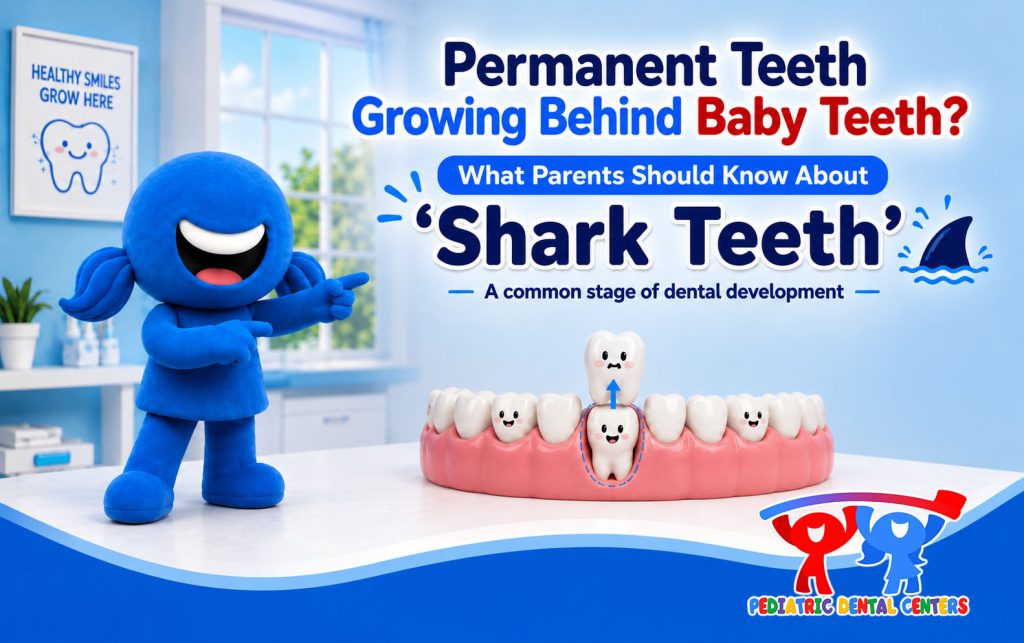
Permanent Teeth Growing Behind Baby Teeth? What Parents Should Know About “Shark Teeth”

Permanent Teeth Growing Behind Baby Teeth? What Parents…

Your child smiles, and suddenly you notice something unexpected: a second row of teeth. A permanent tooth is coming in behind a baby tooth that…

White, Yellow, or Brown Spots on a Child’s Permanent Teeth: Understanding Molar-Incisor Hypomineralization (MIH)

Manchas blancas, amarillas o marrones en los dientes de un niño…

Acaba de erupcionar un diente permanente, pero en lugar de verse uniformemente blanco, una parte luce de color blanco cremoso, amarillo o incluso marrón. Es comprensible que los padres se pregunten:…

Mouth Breathing in Children: How It Can Affect Teeth, Jaw Growth, and Orthodontic Development

Respiración bucal en niños: cómo puede afectar…

Muchos padres notan que su hijo duerme con la boca abierta, respira por la boca durante el día o se despierta con frecuencia con los labios secos…

¿En qué locación le gustaría agendar su cita?

The patients we see range in age from 6 months to 20 years old.