Saltar al contenido

¿Mismo Día? Sí
CITA DE
EMERGENCIA

Dentista de emergencia en Miami: servicios dentales de emergencia el mismo día para dolor de muelas, dientes rotos y lesiones dentales.

Las emergencias dentales pueden ser estresantes, pero tu hijo estará en buenas manos. Nuestro equipo de odontología pediátrica ofrece atención de emergencia el mismo día cuando está disponible para ayudar a aliviar el dolor, tratar problemas dentales urgentes y proteger la sonrisa de tu hijo.

Emergency Dentist in Miami, Pediatric Dental Centers

¿Por qué las familias eligen Pediatric Dental Centers para atención de emergencia dental?

Cuando tu hijo tiene una emergencia dental, necesitas un equipo que responda rápidamente, atienda a los niños con cuidado y ayude a las familias a sentirse acompañadas desde el momento en que llegan.

KIDS AND TEENS

UN PASO ADELANTE DEL PROBLEMA

Elige tu atención dental de emergencia en Miami

Perdida o Relleno de Corona

El diente expuesto es sensible y vulnerable al daño. Podemos reemplazar o reparar rápidamente.

Encías o boca con sangrado

El sangrado persistente después de una lesión o que no se detiene requiere una evaluación profesional.

Hinchazón en la cara o mandíbula

Can indicate serious infection. May need antibiotics and treatment urgently.

Brackets o alambre roto

¿Un alambre le está causando dolor? Podemos repararlo y ayudarle a recuperar la comodidad.

Diente suelto o colgando

No intentes empujarlo de vuelta. Ven a vernos inmediatamente para estabilizar y salvar el diente.

Reparación de dientes rotos

Atención de emergencia para dientes agrietados, rotos o astillados.

Dolor de Muelas

Diagnóstico y tratamiento el mismo día para dolor de muelas e incomodidad dental.

Aceptamos los planes de Medicaid y PPO para la atención dental pediátrica

¿Listo para visitar un dentista pediátrico más cercano de ti en el sur de Florida?

Cómo Pediatric Dental Centers, nos enorgullecemos de proporcionar atención especializada a las necesidades únicas de tus hijos. Estamos aquí para hacer de cada visita una experiencia positiva y empoderadora para tu familia

Dental Emergencies FAQ

Una emergencia dental es cualquier condición que involucre dolor, inflamación, infección, sangrado o traumatismo en los dientes, las encías o la boca y que requiera una evaluación profesional inmediata.

Las emergencias dentales pediátricas más comunes incluyen:

  • Dolor de muelas
  • Inflamación facial
  • Abscesos dentales
  • – Broken teeth
  • Dientes que se han salido por completo
  • Lesiones dentales causadas por deportes o caídas
  • Sangrado incontrolable
  • – Lost crowns or space maintainers
  •  

If you are unsure whether your child’s condition is an emergency, contact our office immediately.

Enjuague la boca con agua tibia y cepille suavemente alrededor del área afectada para eliminar cualquier resto de comida atrapado.

Comuníquese con nuestra oficina lo antes posible si:

  • El dolor persiste
  • El dolor empeora
  • – Swelling develops
  • Su hijo tiene dificultad para comer o dormir
  •  

Do not place aspirin directly on the gums or tooth.

La inflamación facial nunca debe ignorarse.

Puede indicar una infección dental que requiere una evaluación inmediata.

Comuníquese con nuestra oficina de inmediato.

Si la inflamación es severa, aumenta rápidamente, afecta la respiración o compromete el área alrededor de los ojos, busque atención médica de emergencia de inmediato.

Un absceso dental es una infección que afecta un diente o los tejidos que lo rodean.

Los signos pueden incluir:

  • – Inflamación
  • – Dolor
  • – Fiebre
  • – Mal sabor en la boca
  • – Una protuberancia en la encía o secreción
  • – Dificultad para masticar
  •  

Los abscesos dentales requieren tratamiento oportuno y no deben ignorarse.

Sí.

Las infecciones dentales no tratadas pueden propagarse y provocar:

  • – Inflamación facial significativa
  • – Fiebre
  • – Dificultad para comer
  • – Visitas a la sala de emergencias
  • – Hospitalización
  •  

El tratamiento temprano es importante para prevenir complicaciones.

Contact our office as soon as possible.

If possible:

  • – Save any broken pieces
  • – Rinse the mouth gently
  • – Apply a cold compress if swelling develops
  •  

Prompt evaluation allows us to determine the best treatment option.

Even small chips should be evaluated.

While some chips are minor, others may expose deeper tooth structures or affect the long-term health of the tooth.

This is a true dental emergency.

If possible:

  1. Locate the tooth.
  2. Hold it by the crown (top part), not the root.
  3. Gently rinse with water if dirty.
  4. Do not scrub the tooth.
  5. If possible, place the tooth back into the socket.
  6. If reimplantation is not possible, place the tooth in cold milk.
  7. Seek immediate dental care.

The sooner treatment is provided, the better the chances of saving the tooth.

No.

A knocked-out baby tooth should generally not be reinserted because doing so may damage the developing permanent tooth underneath.

Contact our office promptly for evaluation.

Any tooth that becomes loose following trauma should be evaluated by a dentist.

The severity of injury is not always visible immediately after an accident.

A change in tooth color may occur after dental trauma.

A gray, yellow, or dark tooth may indicate injury to the nerve inside the tooth.

An evaluation is recommended to determine whether treatment is needed.

Apply gentle pressure with clean gauze if bleeding occurs.

Use a cold compress to reduce swelling.

Seek medical or dental evaluation if:

  • – Bleeding does not stop
  • – The injury is deep
  • – A large portion of tissue is involved

Apply firm pressure with clean gauze for approximately 10 to 15 minutes.

A small amount of oozing is normal.

If bleeding continues despite pressure, contact our office.

Contact our office to schedule an evaluation.

The tooth may be vulnerable to additional damage, sensitivity, or recurrent decay.

Save the crown if possible and contact our office.

In some cases, the crown can be recemented. Prompt evaluation helps prevent additional complications.

A broken or loose space maintainer should be evaluated as soon as possible.

Delays may allow neighboring teeth to shift into the space needed for permanent teeth.

Try using dental floss gently.

Do not use sharp objects such as pins, knives, or toothpicks.

If the object cannot be removed, contact our office.

Sensitivity can result from:

  • – Cavities
  • – Cracked teeth
  • – Gum irritation
  • – Trauma
  • – Developing infections
  •  

Persistent sensitivity should be evaluated by a dental professional.

Any significant oral injury should be evaluated, especially if:

  • – Teeth appear displaced
  • – Bleeding occurs
  • – Swelling develops
  • – Teeth become loose
  • – Tooth fragments are visible
  •  

Dental injuries may not always be obvious immediately after the accident.

Contact our office promptly for evaluation.

Even if teeth appear normal, trauma can sometimes damage roots, nerves, or supporting structures.

Children participating in sports should wear a properly fitted mouthguard.

Mouthguards help reduce the risk of:

  • – Broken teeth
  • Dientes que se han salido por completo
  • – Lip injuries
  • – Jaw injuries

Contact our office if your child experiences:

  • – Broken brackets
  • – Loose wires
  • – Significant discomfort
  • – Appliances causing soft tissue irritation
  •  

In the meantime, orthodontic wax may provide temporary relief.

Seek immediate medical attention if your child experiences:

  • – Difficulty breathing
  • – Difficulty swallowing
  • – Severe facial swelling
  • – Significant facial trauma
  • – Loss of consciousness
  • Sangrado incontrolable
  • – Suspected jaw fracture
  •  

These situations may require emergency medical care.

Not always.

Delaying treatment can allow:

  • – Pain to worsen
  • – Infections to spread
  • – Additional damage to occur
  • – More extensive treatment to become necessary
  •  

Prompt evaluation is often the best approach.

A basic dental emergency kit may include:

  • – Gauze
  • – Dental floss
  • – Cold packs
  • – A small container with a lid
  • – Contact information for your dentist
  •  

Being prepared can help you respond quickly when emergencies occur.

As soon as possible.

Many dental injuries have better outcomes when evaluated and treated promptly.

Some emergencies, such as knocked-out permanent teeth, require immediate attention.

Sí.

Although baby teeth eventually fall out, injuries and infections involving primary teeth can affect:

  • – Pain levels
  • – Eating and sleeping
  • – Permanent tooth development
  • – Overall oral health

Often, yes.

Prompt treatment may help:

  • – Save teeth
  • – Prevent infections
  • – Reduce pain
  • – Avoid more extensive procedures
  • – Improve long-term outcomes

Whenever possible, Pediatric Dental Centers makes every effort to accommodate children experiencing dental emergencies.

Please call the office immediately so our team can determine the most appropriate next steps.

Dental emergencies can be frightening for both children and parents.

Rapid evaluation and treatment help relieve pain, prevent complications, and protect your child’s long-term oral health.

Yes, in many cases.

The sooner the tooth receives professional attention, the better the chances of successful reimplantation.

Time is critical.

Sí.

Bring any fragments to the appointment whenever possible.

In some situations, they may assist in treatment planning or restoration.

Trauma can affect the blood supply or nerve inside the tooth.

Color changes may occur days, weeks, or months after an injury and should be monitored by a dentist.

Pediatric Dental Centers provides emergency dental care for children throughout Miami-Dade and Broward County, including treatment for toothaches, swelling, infections, dental injuries, broken teeth, and knocked-out teeth.

Conoce Más sobre PDC

¿Quieres saber más sobre Pediatric Dental Centers?

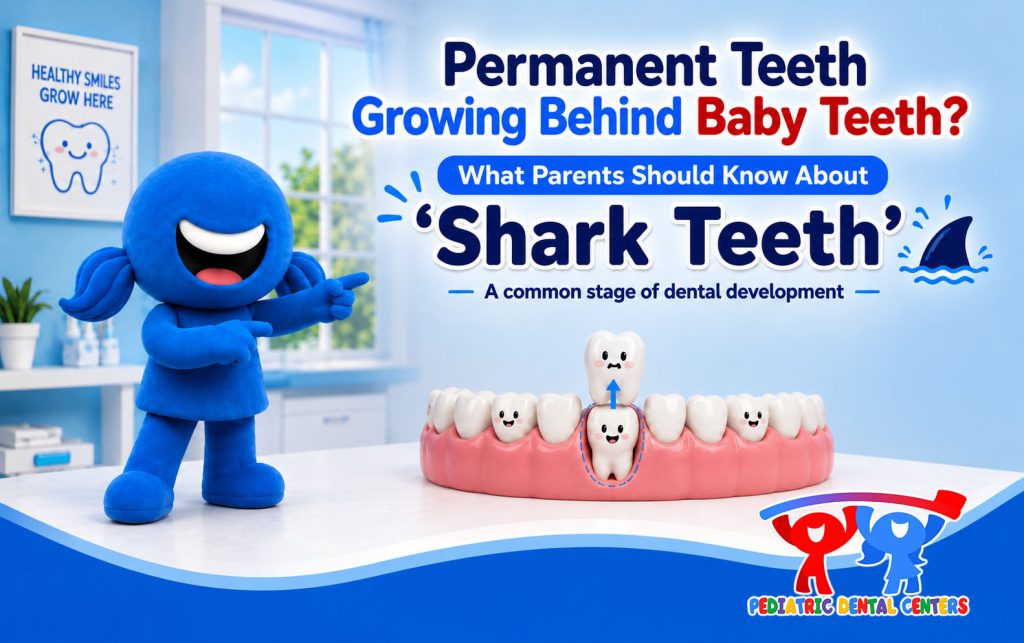
Permanent Teeth Growing Behind Baby Teeth? What Parents Should Know About “Shark Teeth”

Permanent Teeth Growing Behind Baby Teeth? What Parents Should Know About “Shark Teeth”

Your child smiles, and suddenly you notice something unexpected: a second row of teeth. A permanent tooth is coming in behind a baby tooth that…

White, Yellow, or Brown Spots on a Child’s Permanent Teeth: Understanding Molar-Incisor Hypomineralization (MIH)

Manchas blancas, amarillas o marrones en los dientes permanentes de tu hijo: comprensión de la Hipomineralización Molar-Incisiva (MIH)

Acaba de erupcionar un diente permanente, pero en lugar de verse uniformemente blanco, una parte luce de color blanco cremoso, amarillo o incluso marrón. Es comprensible que los padres se pregunten:…

Mouth Breathing in Children: How It Can Affect Teeth, Jaw Growth, and Orthodontic Development

Respiración bucal en niños: cómo puede afectar los dientes, el crecimiento de la mandíbula y el desarrollo ortodóntico

Muchos padres notan que su hijo duerme con la boca abierta, respira por la boca durante el día o se despierta con frecuencia con los labios secos…

¿En qué locación le gustaría agendar su cita?

The patients we see range in age from 6 months to 20 years old.