Saltar al contenido

¡Esencial!
Mantenedores de espacio

Aparatos dentales personalizados que conservan el espacio para los dientes permanentes después de la pérdida prematura de un diente de leche.


Ofrecemos mantenedores de espacio personalizados para niños cuyos dientes de leche se han perdido antes de tiempo debido a caries, lesiones o extracciones. Estos aparatos ayudan a evitar que los dientes cercanos se desplacen hacia el espacio vacío mientras el diente permanente continúa desarrollándose.

¿Por qué las familias nos eligen para los mantenedores de espacio infantiles en Miami?

Las familias que buscan un mantenedor de espacio pediátrico cerca de ellas confían en Pediatric Dental Centers para recibir atención personalizada diseñada para acompañar el desarrollo dental de sus hijos. Nuestro equipo de odontología pediátrica evalúa el diente que falta, el espacio disponible, el patrón de erupción y la salud bucal antes de recomendar el aparato más adecuado.

Aceptamos planes de Medicaid y PPO

¿Listo para proteger la sonrisa de tu hijo mientras se desarrolla?

Si tu hijo ha perdido un diente de leche antes de tiempo, un mantenedor de espacio puede ayudar a conservar el espacio necesario para el diente permanente que está debajo. Agenda una evaluación con Pediatric Dental Centers para determinar si tu hijo necesita un aparato y cuál es la mejor opción para su sonrisa en desarrollo.

Frequently Asked Questions About Space Maintainer for Kids

A space maintainer is a small, custom-made dental appliance used after certain baby teeth are lost earlier than expected. It holds the empty space open so nearby teeth do not move into it while the permanent tooth develops and prepares to erupt.

Baby teeth help guide permanent teeth and maintain the proper amount of space in the dental arch. If a baby tooth is lost too early because of decay, infection, injury, or extraction, the neighboring teeth may begin moving toward the opening. A space maintainer can help reduce this unwanted movement.

No. Not every missing baby tooth requires an appliance. The pediatric dentist considers which tooth was lost, your child’s age, the position and development of the permanent tooth, available space, bite, oral health, and the expected eruption timeline before making a recommendation.

Space maintainers can be fixed or removable. Common fixed options include band-and-loop appliances, distal shoes, lingual holding arches, and Nance appliances. A removable appliance may be appropriate in selected cases. Your child’s dentist will choose the option that best fits their developmental and dental needs.

The appliance usually remains in place until the permanent tooth begins erupting or the dentist determines that the space no longer needs to be maintained. The timeline varies according to the missing tooth and your child’s stage of dental development, so regular follow-up appointments are important.

Your child should brush carefully around the appliance and floss as directed by the dental team. Sticky candy, chewing gum, ice, and very hard foods should be avoided because they can loosen or damage the appliance. Contact the office promptly if it becomes loose, broken, uncomfortable, or detached.

Conoce Más sobre PDC

¿Quieres saber más sobre Pediatric Dental Centers?

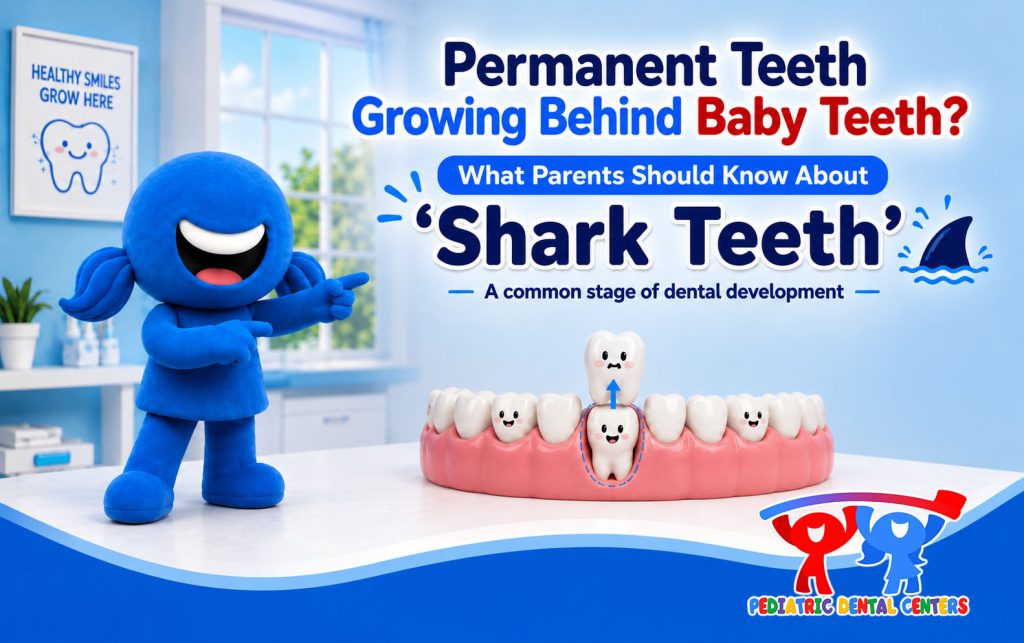
Permanent Teeth Growing Behind Baby Teeth? What Parents Should Know About “Shark Teeth”

Permanent Teeth Growing Behind Baby Teeth? What Parents…

Your child smiles, and suddenly you notice something unexpected: a second row of teeth. A permanent tooth is coming in behind a baby tooth that…

White, Yellow, or Brown Spots on a Child’s Permanent Teeth: Understanding Molar-Incisor Hypomineralization (MIH)

Manchas blancas, amarillas o marrones en los dientes de un niño…

Acaba de erupcionar un diente permanente, pero en lugar de verse uniformemente blanco, una parte luce de color blanco cremoso, amarillo o incluso marrón. Es comprensible que los padres se pregunten:…

Mouth Breathing in Children: How It Can Affect Teeth, Jaw Growth, and Orthodontic Development

Respiración bucal en niños: cómo puede afectar…

Muchos padres notan que su hijo duerme con la boca abierta, respira por la boca durante el día o se despierta con frecuencia con los labios secos…

¿En qué locación le gustaría agendar su cita?

The patients we see range in age from 6 months to 20 years old.