Saltar al contenido

Proactive
EARLY ORTHODONTICS

Early orthodontic evaluations and personalized treatment designed to guide jaw growth, improve developing bites, and support healthier smiles.

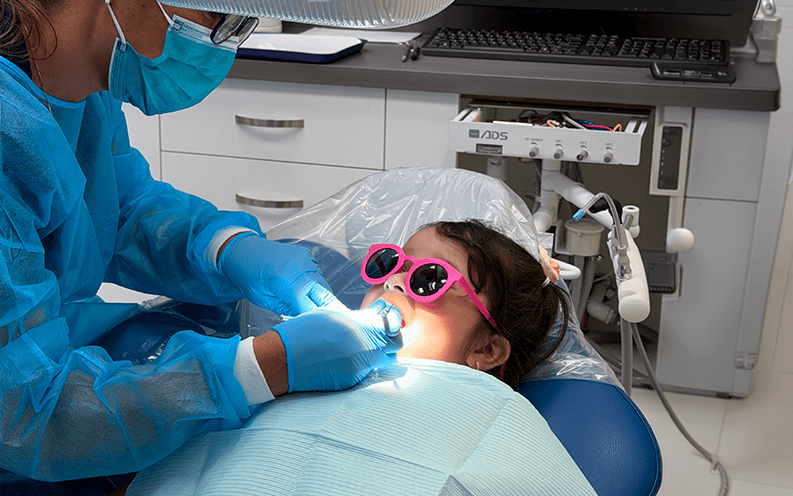
We provide early orthodontic evaluations for children throughout South Florida. Our orthodontic team examines your child’s teeth, bite, jaw growth, and eruption patterns to determine whether treatment is needed now, should begin later, or simply requires continued monitoring.

Why Families Choose Us
for Early Orthodontics in Miami

Families searching for an early orthodontic evaluation near them trust Pediatric Dental Centers for personalized care designed around their child’s growth and dental development. Our team carefully evaluates tooth eruption, jaw alignment, available space, oral habits, and bite development before recommending treatment or continued observation.

Aceptamos planes de Medicaid y PPO

Ready to Check Your Child’s Growing Smile?

An early orthodontic evaluation can identify developing concerns before they become more complicated. Whether your child needs Phase I treatment or only periodic monitoring, our team will explain their needs and recommend the right time to begin care.

Frequently Asked Questions About Early Orthodontics for Kids

Early orthodontics, also called Phase I or interceptive orthodontic treatment, is care provided while a child still has a combination of baby and permanent teeth. Its purpose may be to guide jaw growth, address developing bite concerns, preserve or create space for permanent teeth, and improve the way the upper and lower jaws fit together.

Not every child needs Phase I treatment. The recommendation depends on their growth, tooth eruption, bite, available space, and individual orthodontic needs.

The American Association of Orthodontists recommends that children receive their first orthodontic checkup by age seven. Enough permanent teeth have usually erupted by this age to identify developing problems with alignment, spacing, jaw growth, and the bite.

Children younger than seven should also be evaluated when parents or dentists notice a possible concern.

No. An early evaluation does not automatically mean treatment will begin. Some children require early intervention, while others only need periodic monitoring as their permanent teeth and jaws continue developing. The orthodontic team will explain whether treatment is recommended now, later, or not at all.

Possible signs include crowded or overlapping teeth, large gaps, early or late loss of baby teeth, difficulty chewing or biting, jaws that appear uneven, front teeth that do not meet properly, protruding teeth, persistent thumb-sucking, mouth breathing, or permanent teeth erupting in unusual positions.

A professional evaluation is needed because some developing problems may not be obvious to parents.

Treatment depends on the specific condition and may include palatal expanders, limited braces, space-maintaining or space-regaining appliances, habit-correction appliances, or other devices designed to guide jaw and dental development. Some children may only require observation and periodic growth checks.

The chosen appliance and timing should be based on the child’s developmental stage, diagnosis, treatment goals, and ability to cooperate.

Possibly. Phase I treatment may improve certain developing problems and make later care less complicated, but it does not guarantee that braces or aligners will not be needed during adolescence. After Phase I, the orthodontic team monitors the eruption of the remaining permanent teeth and determines whether a second phase is recommended.

Parents should view early treatment as a way to address specific developmental concerns at the most appropriate time—not as a guaranteed replacement for future orthodontic care.

Conoce Más sobre PDC

¿Quieres saber más sobre Pediatric Dental Centers?

Together for Colombia: Pediatric Dental Centers Launches Donation Drive for Earthquake-Affected Families

Together for Colombia: Pediatric Dental Centers Launches Donation…

Pediatric Dental Centers is joining the relief efforts following the devastating earthquake in Colombia, collecting essential supplies to support families and communities affected by the…

Healthy Smiles Start with Healthy Eating: A Parent’s Guide to Pediatric Dental Health and Children’s Nutrition

Healthy Smiles Start with Healthy Eating: A Parent’s…

When it comes to protecting your child’s smile, most parents think about brushing, flossing, and regular dental checkups. While these habits are essential, diet and nutrition…

Teeth Numbers and Names: A Parent’s Guide to Your Child’s Dental Anatomy

Teeth Numbers and Names: A Parent’s Guide to…

Have you ever heard your child’s dentist say something like “tooth number 8” or “tooth letter K” and wondered what it meant? Dentists use a…

¿En qué locación le gustaría agendar su cita?

The patients we see range in age from 6 months to 20 years old.