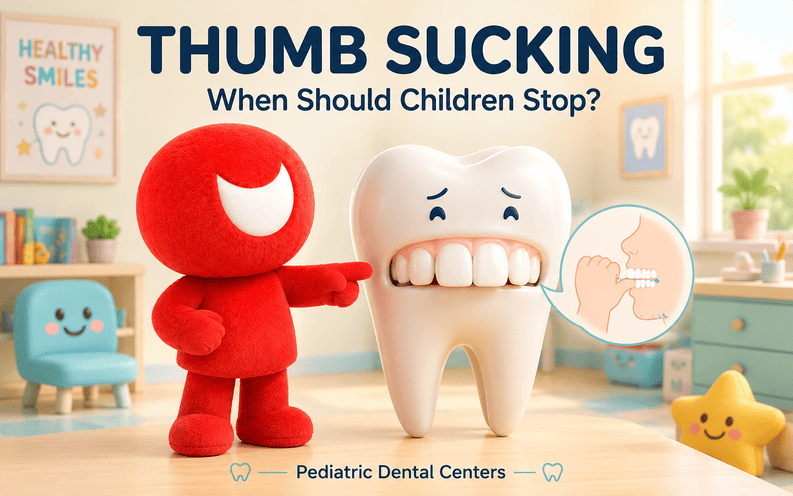
Chuparse el dedo es uno de los hábitos más comunes de la infancia. Muchos bebés comienzan a chuparse el dedo incluso antes de nacer, y en los lactantes es completamente normal. Les brinda consuelo, les ayuda a calmarse por sí mismos y puede hacer que se sientan seguros en situaciones estresantes o al dormirse.
En la mayoría de los niños, el hábito de chuparse el dedo disminuye de forma natural a medida que crecen. Sin embargo, cuando el hábito continúa más allá de la etapa de niño pequeño, puede comenzar a afectar el desarrollo de los dientes, los maxilares e incluso el habla.
Una de las preguntas que más escuchan nuestros dentistas pediátricos es:
“¿Realmente es tan dañino chuparse el dedo?”
La respuesta depende de con qué frecuencia, con qué intensidad y durante cuánto tiempo un niño se chupa el dedo. Aunque chuparse el dedo de forma ocasional durante la infancia suele ser inofensivo, hacerlo de forma persistente una vez que comienzan a desarrollarse los cambios permanentes en la boca puede provocar problemas ortodónticos importantes.
En Pediatric Dental Centers, ayudamos a las familias de Miami Shores, Liberty City, Allapattah, West Kendall, Homestead, Palmetto Bay, Miami Gardens, North Lauderdale, así como de otras comunidades en el sur de Florida a entender cómo afecta chuparse el dedo al desarrollo bucal y cómo ayudar a los niños a dejar el hábito antes de que cause daños duraderos.
Veamos por qué dejar de chuparse el dedo a tiempo es una de las mejores inversiones que puede hacer en la futura sonrisa de su hijo.
¿Por qué los niños se chupan el dedo?
Chuparse el dedo es un reflejo completamente natural.
Los bebés se chupan el dedo porque:
- Les brinda consuelo
- Les ayuda a relajarse
- Les hace sentirse seguros
- Les ayuda a dormirse
- Reduce la ansiedad en situaciones desconocidas
Muchos niños lo dejan por sí solos entre los 2 y los 4 años, pero otros continúan hasta bien entrada la escuela primaria.
Cuanto más tiempo continúa el hábito, mayor es la probabilidad de que afecte el desarrollo bucal.
Por qué chuparse el dedo preocupa más que el uso del chupete
Muchos padres suponen que chuparse el dedo es menos dañino que usar un chupete.
En realidad, con frecuencia ocurre lo contrario.
A diferencia de un chupete, el dedo:
- Siempre está disponible
- No se puede quitar
- Puede chuparse durante períodos más largos
- Con frecuencia ejerce una presión más fuerte contra los dientes y el paladar
Por eso, chuparse el dedo de forma prolongada suele causar cambios dentales más graves que el uso prolongado del chupete.
Cómo cambia el hábito de chuparse el dedo la boca en crecimiento
La boca de los niños se desarrolla rápidamente durante los primeros años de vida.
La presión repetida del dedo puede ir modificando poco a poco:
- El maxilar superior
- El techo de la boca (paladar)
- La posición de los dientes frontales
- La alineación de la mordida
- Patrones de crecimiento facial
Estos cambios ocurren de forma gradual y a menudo pasan desapercibidos hasta que los dientes permanentes comienzan a salir.
Problemas dentales comunes causados por chuparse el dedo
Chuparse el dedo de forma prolongada puede provocar:
Mordida abierta
Uno de los efectos más reconocibles.
Los dientes frontales superiores e inferiores ya no se tocan cuando el niño junta los dientes al morder.
Esto puede dificultar:
- Morder los alimentos
- Masticar correctamente
- Hablar con claridad
Dientes frontales protuberantes
La presión constante del dedo empuja los dientes frontales superiores hacia adelante.
Estos dientes se vuelven:
- Más prominentes
- Más propensos a lesionarse
- Más difíciles de limpiar
- Menos estéticos
Mordida cruzada
Chuparse el dedo puede estrechar el maxilar superior.
Cuando esto ocurre, los dientes superiores encajan por dentro de los inferiores en lugar de por fuera.
Las mordidas cruzadas a menudo requieren expansión ortodóntica para corregirse.
Maxilar superior estrecho
El dedo ocupa el espacio donde la lengua debería descansar de forma natural.
Sin la presión normal de la lengua, es posible que el maxilar superior no se ensanche correctamente durante el crecimiento.
Cambios en el desarrollo facial
Chuparse el dedo de forma intensa y prolongada puede alterar el patrón normal de crecimiento de los maxilares y del rostro.
La intervención temprana reduce considerablemente este riesgo.
¿Puede chuparse el dedo afectar el habla?
Sí.
Los niños que continúan chupándose el dedo después de que se desarrolla su habla pueden tener dificultad para producir ciertos sonidos.
Los problemas del habla pueden incluir:
- Ceceo
- Dificultad para pronunciar la S
- Dificultad para pronunciar la Z
- Dificultad para pronunciar el sonido TH
- Dificultad para colocar la lengua correctamente
En algunos niños, el habla mejora después de que se abandona el hábito.
Otros pueden beneficiarse de la terapia del habla además del tratamiento dental.
¿Chuparse el dedo causa caries?
Chuparse el dedo no causa caries directamente.
Sin embargo, chuparse el dedo con frecuencia puede:
- Transferir bacterias a la boca
- Irritar el tejido de las encías
- Crear condiciones que dificultan la higiene bucal si los dientes se desalinean
Mantener limpias tanto las manos como los dientes sigue siendo importante.
¿Cuándo debe dejar de chuparse el dedo?
La mayoría de los dentistas pediátricos recomienda el siguiente calendario:
Del nacimiento a los 2 años
Por lo general, chuparse el dedo se considera normal.
Normalmente no es necesaria ninguna intervención.
De 2 a 3 años
Los padres deben comenzar a animar a los niños a reducir el hábito.
El refuerzo positivo funciona mucho mejor que el castigo.
Antes de los 4 años
Lo ideal es que el hábito de chuparse el dedo termine antes de que se desarrollen cambios dentales permanentes.
Muchos niños pueden dejarlo con ánimo y apoyo durante esta etapa.
Antes de que salgan los dientes frontales permanentes
Este es uno de los hitos más importantes.
Los dientes frontales permanentes suelen comenzar a salir alrededor de los 6 años.
Continuar chupándose el dedo después de este punto aumenta significativamente el riesgo de problemas permanentes de mordida.
Cómo pueden ayudar los padres a su hijo a dejarlo
Dejar el hábito requiere paciencia.
Estas son algunas estrategias que suelen funcionar bien.
Comprenda el detonante
Muchos niños se chupan el dedo porque están:
- Cansados
- Nerviosos
- Aburridos
- Ansiosos
- Quedándose dormidos
Atender la emoción de fondo a menudo ayuda a reducir el hábito.
Elogie los logros
Celebre el progreso en lugar de centrarse en los contratiempos.
Las tablas de calcomanías, las pequeñas recompensas y el estímulo pueden ser muy eficaces.
Evite el castigo
Las críticas, la vergüenza o el castigo suelen aumentar el estrés.
El estrés a menudo hace que los niños se chupen el dedo aún más.
Cree alternativas para la hora de dormir
Reemplace el hábito de chuparse el dedo con rutinas reconfortantes como:
- Leer juntos
- Escuchar música relajante
- Abrazar un peluche favorito
- Más abrazos y mimos
Use recordatorios amables
Muchos niños se chupan el dedo sin darse cuenta.
Los recordatorios amables son mucho más eficaces que los regaños constantes.
¿Qué pasa si mi hijo no puede dejarlo?
Algunos niños desarrollan un hábito muy fuerte de chuparse el dedo.
Si el hábito continúa a pesar de los esfuerzos constantes, su dentista pediátrico puede recomendar:
- Asesoramiento sobre el hábito
- Técnicas de conducta positiva
- Un aparato recordatorio del hábito en casos seleccionados
- Una evaluación ortodóntica temprana si ya se han desarrollado cambios en la mordida
Estos tratamientos son individualizados y solo se recomiendan cuando es necesario.
¿Pueden los dientes corregirse por sí solos?
En muchos niños, sí.
Si el hábito de chuparse el dedo se abandona a tiempo, los maxilares en crecimiento suelen tener una excelente capacidad de recuperarse de forma natural.
Los cambios leves en la mordida con frecuencia mejoran sin tratamiento ortodóntico una vez que termina el hábito.
Cuanto antes se abandone el hábito, mayores son las probabilidades de corrección espontánea.
La importancia de las visitas dentales tempranas
La Academia Estadounidense de Odontología Pediátrica recomienda que todos los niños visiten a un dentista pediátrico antes de su primer cumpleaños o dentro de los seis meses posteriores a la erupción del primer diente.
Los chequeos dentales regulares permiten a su dentista pediátrico:
- Monitorear el crecimiento de la mandíbula
- Evaluar el desarrollo de la mordida
- Detectar a tiempo posibles problemas ortodónticos
- Brindar orientación para dejar de chuparse el dedo antes de que ocurran daños permanentes
La atención preventiva siempre es más fácil—y menos costosa—que corregir los problemas después de que se desarrollan.
En resumen
Chuparse el dedo es una parte normal de la infancia, pero no debe convertirse en un hábito a largo plazo.
Cuando el hábito de chuparse el dedo continúa más allá de la etapa de niño pequeño, puede afectar la alineación de los dientes, la forma de los maxilares, el desarrollo del habla y el crecimiento facial en general. Como el dedo siempre está disponible y a menudo ejerce más presión que un chupete, chuparse el dedo de forma persistente puede ser especialmente difícil de superar y puede tener un mayor impacto en el desarrollo bucal.
Con paciencia, ánimo y la orientación de su dentista pediátrico, la mayoría de los niños pueden dejar el hábito con éxito antes de que surjan problemas duraderos. Actuar a tiempo le da a su hijo la mejor oportunidad de desarrollar una mordida saludable y una sonrisa segura.
Programe la visita dental de su hijo en Pediatric Dental Centers
Si su hijo todavía se chupa el dedo, una evaluación temprana puede ayudar a determinar si el hábito está afectando su desarrollo bucal.
En Pediatric Dental Centers, nuestros dentistas pediátricos certificados brindan atención preventiva integral, evaluaciones de crecimiento y desarrollo y orientación personalizada para ayudar a los niños a dejar de chuparse el dedo de forma positiva y comprensiva. Atendemos con orgullo a familias de Miami Shores, Liberty City, Allapattah, West Kendall, Homestead, Palmetto Bay, Miami Gardens, North Lauderdale, así como de otras comunidades en el sur de Florida y áreas cercanas.
Nuestro objetivo es identificar a tiempo posibles problemas, proteger la sonrisa en desarrollo de su hijo y reducir la necesidad de tratamiento ortodóntico futuro siempre que sea posible.
Comuníquese hoy con Pediatric Dental Centers para programar la cita de su hijo y darle el mejor comienzo posible hacia toda una vida de sonrisas seguras.