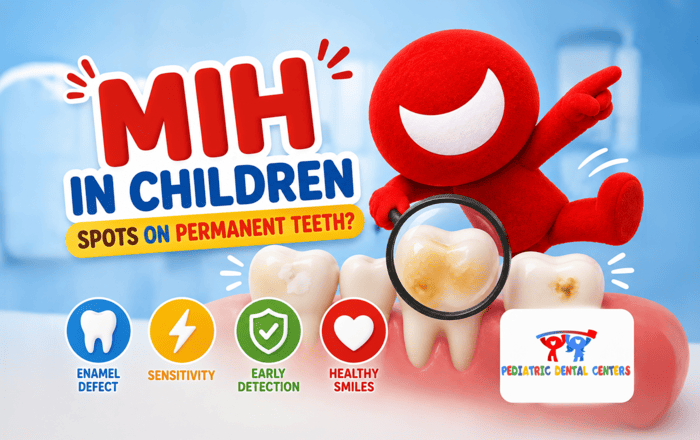
Acaba de erupcionar un diente permanente, pero en lugar de verse uniformemente blanco, una parte luce de color blanco cremoso, amarillo o incluso marrón. Es comprensible que los padres se pregunten: ¿Es una caries? ¿Mi hijo no se cepilló correctamente? ¿El diente está dañado de forma permanente?
Una posible explicación es hipomineralización molar-incisivo,comúnmente abreviada como MIH..
La MIH es una alteración del desarrollo del esmalte que afecta con mayor frecuencia a uno o más de los primeros molares permanentes y también puede afectar a los incisivos permanentes. Dado que los primeros molares permanentes generalmente erupcionan alrededor de los seis años, esta condición puede hacerse evidente relativamente temprano en la infancia.
Reconocer la MIH es importante porque los dientes afectados pueden requerir cuidados preventivos adicionales y, en los casos más graves, tratamiento restaurador.
¿Qué es la hipomineralización molar-incisivo?
El esmalte es la capa externa dura que protege el diente. Normalmente, durante su desarrollo, el esmalte se mineraliza en gran medida y se vuelve fuerte.
En un diente afectado por MIH, algunas áreas del esmalte no se han mineralizado normalmente durante el desarrollo dental. Por esta razón, el esmalte afectado puede presentar diferencias en el color, la resistencia, la porosidad o la sensibilidad en comparación con el esmalte normal.
La MIH afecta principalmente a los dientes permanentes y es diferente de la caries dental común relacionada con la acumulación de placa.
¿Cómo se ve la MIH?
La apariencia puede variar considerablemente.
Los padres pueden notar un área claramente definida en un diente permanente recién erupcionado que presenta un color:
- Blanco tiza o blanco cremoso
- Amarillo
- Amarillo-marrón
- Marrón
Estas áreas se conocen como opacidades demarcadas porque generalmente existe un límite claramente reconocible entre el esmalte afectado y el esmalte normal.
En los casos leves, el diente puede simplemente tener una apariencia diferente.
En los casos más significativos, el esmalte puede ser más débil y comenzar a deteriorarse después de que el diente erupciona y queda expuesto a las fuerzas de la masticación.
¿La MIH es lo mismo que una caries?
No.
La MIH es un defecto del desarrollo del esmalte, mientras que la caries dental es un proceso de enfermedad que involucra actividad bacteriana, carbohidratos fermentables, producción de ácidos y desmineralización de la estructura dental.
Sin embargo, ambos problemas pueden llegar a estar relacionados.
Debido a que el esmalte gravemente afectado por MIH puede ser poroso o débil, la placa puede acumularse en áreas irregulares y el esmalte puede deteriorarse. Esto puede hacer que el diente sea más difícil de limpiar y potencialmente más vulnerable al desarrollo de caries.
Por esta razón, el diagnóstico temprano puede ser muy importante.
¿Por qué ocurre la MIH?
La causa exacta de la MIH no se comprende por completo.
Los investigadores han estudiado numerosos factores posibles que pueden ocurrir durante el período en que se están desarrollando los dientes permanentes. La MIH parece tener un origen multifactorial, en lugar de deberse a una única causa universal.
Es importante que los padres comprendan lo siguiente:
La MIH no significa que un padre no haya cepillado adecuadamente los dientes de su hijo ni que el niño haya consumido demasiado azúcar mientras el diente permanente afectado estaba erupcionando.
La alteración del esmalte se desarrolló mientras el propio diente se estaba formando.
Sin embargo, una vez que el diente erupciona, una excelente higiene bucal, una exposición adecuada al flúor, el control de la dieta y la atención dental profesional se vuelven especialmente importantes.
¿Por qué los dientes con MIH pueden ser sensibles?
La sensibilidad es uno de los aspectos más difíciles de la MIH.
Algunos niños afectados sienten molestias cuando el diente se expone a:
- Agua fría
- Aire frío
- Cepillado dental
- Ciertos alimentos
- Procedimientos dentales
Por esta razón, un niño puede evitar cepillarse el diente afectado porque el cepillado le causa dolor.
Desafortunadamente, un cepillado inadecuado puede aumentar la acumulación de placa y el riesgo de enfermedades dentales.
Los padres deben informar al dentista pediátrico si el niño presenta sensibilidad, en lugar de asumir que simplemente se está resistiendo al cepillado.
Por qué es importante la detección temprana
Los primeros molares permanentes son dientes extremadamente importantes.
A diferencia de los molares temporales, están destinados a permanecer durante toda la vida adulta. Debido a que con frecuencia erupcionan alrededor de los seis años, algunos padres pueden confundirlos con dientes de leche adicionales.
Un primer molar permanente comprometido requiere un seguimiento cuidadoso.
La identificación temprana de la MIH permite al dentista pediátrico evaluar la gravedad del defecto del esmalte y desarrollar una estrategia individualizada de prevención o tratamiento.
¿Cómo se trata la MIH?
El tratamiento depende del diente afectado, la gravedad del defecto, la presencia de sensibilidad, el grado de deterioro del esmalte, el riesgo de caries, la edad del niño y otros factores clínicos.
El manejo puede incluir:
Flúor y cuidado preventivo
Se pueden recomendar aplicaciones profesionales de flúor para ayudar a proteger las superficies dentales susceptibles y controlar el riesgo de caries.
Estrategias para reducir la sensibilidad
Los niños que presentan sensibilidad pueden beneficiarse de medidas preventivas o desensibilizantes específicas recomendadas por su dentista.
Sellantes dentales
Cuando sea apropiado, los sellantes dentales pueden proteger los surcos y fosas susceptibles de los molares permanentes.
El dentista pediátrico primero debe determinar si el esmalte es adecuado para que el sellante pueda colocarse de manera efectiva y predecible.
Restauraciones
Si el esmalte se ha deteriorado o se ha desarrollado una caries, puede ser necesaria una restauración.
La elección del material y de la técnica restauradora depende de la gravedad y la ubicación del defecto.
Coronas
Los molares afectados de manera más extensa pueden requerir una mayor cobertura para proteger la estructura dental restante.
Extracción y planificación ortodóntica
En casos graves, un primer molar permanente puede tener un pronóstico a largo plazo tan desfavorable que sea necesario considerar su extracción.
Esta decisión requiere una planificación cuidadosa.
El momento de la extracción puede influir significativamente en la forma en que los dientes permanentes vecinos erupcionan y se desplazan. Por esta razón, los casos graves pueden beneficiarse de una evaluación coordinada entre el dentista pediátrico y el ortodoncista antes de realizar la extracción.
¿Qué ocurre con las manchas blancas en los dientes frontales?
No todas las manchas blancas son MIH.
Los cambios en el color del esmalte pueden tener múltiples causas, entre ellas defectos del desarrollo del esmalte, fluorosis, desmineralización temprana asociada con la placa, traumatismos previos que afectaron a un diente permanente en desarrollo y otras condiciones.
Una fotografía o una descripción visual por sí solas pueden no ser suficientes para determinar la causa.
Un dentista pediátrico puede examinar la ubicación, los bordes, la textura y la distribución de la decoloración, además de tener en cuenta los antecedentes médicos y dentales del niño.
¿Qué pueden hacer los padres en casa?
Si los dientes permanentes recién erupcionados de su hijo presentan áreas inusuales de color blanco, amarillo o marrón:
- No asuma que el diente está sucio.
- No lo cepille de manera agresiva ni intente eliminar la decoloración.
- Mantenga el cepillado dos veces al día con una pasta dental con flúor apropiada para la edad.
- Preste especial atención a los molares permanentes recién erupcionados.
- Limite el consumo frecuente de bebidas y refrigerios azucarados.
- Informe al dentista si el niño presenta sensibilidad.
- Asista a las citas dentales preventivas recomendadas.
Los niños con esmalte comprometido pueden necesitar un programa de prevención adaptado a su nivel de riesgo individual.
La importancia de los molares de los seis años
Los padres deben comenzar a estar atentos a la aparición de los molares permanentes alrededor de los seis años.
Estos dientes erupcionan detrás de los últimos molares temporales, en lugar de reemplazar dientes de leche. Por esta razón, es posible que los padres no se den cuenta de inmediato de que se trata de dientes permanentes.
Desde el momento en que comienzan a erupcionar, deben cepillarse cuidadosamente.
Si uno de ellos se ve notablemente más blanco, amarillo o marrón que los demás, o si su hijo se queja de que le duele al cepillarse o al tomar agua fría, consulte con su dentista pediátrico para que pueda evaluarlo.
Los dentistas pediátricos pueden identificar problemas del esmalte de manera temprana
La odontología pediátrica no se enfoca únicamente en tratar enfermedades existentes, sino también en supervisar el desarrollo dental.
Los exámenes regulares brindan la oportunidad de identificar dientes permanentes recién erupcionados, evaluar la calidad del esmalte, valorar el riesgo de caries e intervenir antes de que problemas relativamente pequeños se vuelvan más complicados.
En los niños con MIH, el diagnóstico temprano puede ser especialmente útil porque el manejo puede comenzar cuando los molares permanentes aún están recién erupcionados.
Atención odontológica pediátrica en Miami-Dade y Broward
Si nota áreas blancas, amarillas o marrones en los dientes permanentes de su hijo, no asuma que se trata de caries, pero tampoco las ignore.
Una evaluación dental pediátrica puede ayudar a determinar si la decoloración corresponde a MIH, a otra alteración del desarrollo del esmalte, a una caries en etapa inicial o a alguna otra condición dental.
Pediatric Dental Centers brinda atención odontológica pediátrica en los condados de Miami-Dade y Broward, con servicios preventivos, restauradores y de ortodoncia diseñados para niños y adolescentes.
¿Está buscando un dentista pediátrico en Miami o Broward? Comuníquese con Pediatric Dental Centers para programar la evaluación dental de su hijo.