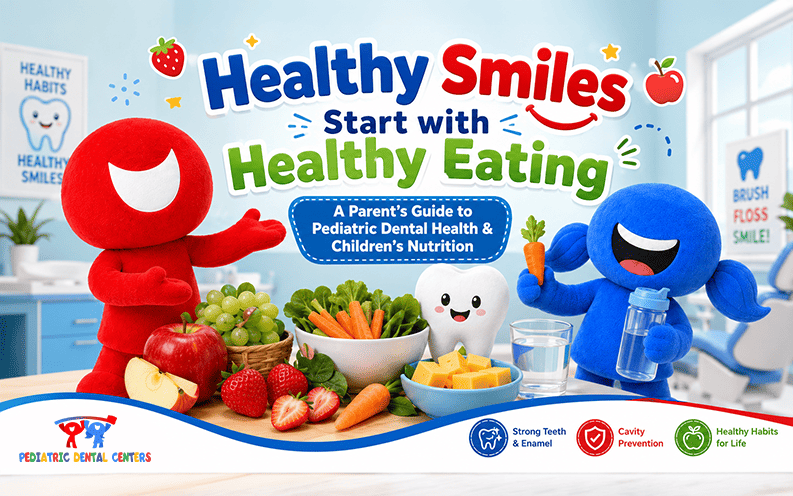
Cuando se trata de proteger la sonrisa de su hijo, la mayoría de los padres piensa en el cepillado, el uso del hilo dental y las revisiones dentales regulares. Si bien estos hábitos son esenciales, la alimentación y la nutrición desempeñan un papel igualmente importante en la salud oral de los niños. Desde la aparición del primer diente de un bebé hasta la adolescencia, lo que los niños comen y beben influye directamente en su riesgo de desarrollar caries, en la salud de sus encías y en su desarrollo dental a largo plazo.
nuestro equipo de odontología pediátrica prioriza la prevención. Al combinar buenas decisiones nutricionales con una higiene oral constante, las familias pueden reducir significativamente el riesgo de caries y ayudar a los niños a mantener sonrisas fuertes y saludables para toda la vida.
Por qué la nutrición es importante para la salud oral infantil
En odontología pediátrica, vemos con frecuencia cómo la alimentación influye en el desarrollo de caries. La boca contiene naturalmente bacterias que se alimentan de azúcares y carbohidratos refinados. Cuando estas bacterias descomponen el azúcar, producen ácidos que atacan el esmalte dental.
Con el tiempo, la exposición repetida a estos ácidos debilita el esmalte y provoca caries. Lo que muchos padres no saben es que la frecuencia con la que se consume azúcar es más importante que la cantidad. Comer bocadillos constantemente o beber bebidas azucaradas a lo largo del día mantiene los dientes bajo un ataque ácido continuo.
Una alimentación equilibrada y beneficiosa para los dientes ayuda a:
- Fortalecer los dientes en desarrollo y el esmalte
- Mantener encías y tejidos orales saludables
- Reducir el riesgo de caries en niños y adolescentes
- Favorecer el crecimiento y el bienestar general
- Complementar la atención dental pediátrica preventiva
Los mejores alimentos para dientes fuertes y sonrisas saludables
Una alimentación bien equilibrada favorece tanto la salud general como la salud oral. Muchos alimentos ricos en nutrientes también ayudan a proteger los dientes de los niños.
Productos lácteos para fortalecer el esmalte
La leche, el queso y el yogur natural son excelentes fuentes de calcio y fósforo, minerales esenciales para fortalecer el esmalte dental. El queso es especialmente beneficioso para la salud oral infantil porque estimula la producción de saliva, lo que ayuda a neutralizar los ácidos y eliminar restos de alimentos.
Frutas frescas para una nutrición natural
Las frutas enteras como las manzanas, peras, fresas y otras bayas, naranjas y bananas aportan vitaminas esenciales, fibra y antioxidantes. Aunque las frutas contienen azúcares naturales, comer la fruta entera es mucho mejor para la salud dental que beber jugo de frutas, ya que la fibra ayuda a disminuir la absorción del azúcar y estimula la masticación.
Vegetales que favorecen la salud de las encías
Los vegetales crujientes como zanahorias, apio, pepinos y pimientos ayudan a estimular el flujo de saliva y a limpiar naturalmente los dientes, al mismo tiempo que aportan nutrientes importantes para mantener las encías saludables.
Proteínas magras para el desarrollo dental
El pollo, el pescado, los huevos, los frijoles y las carnes magras aportan proteínas y fósforo, nutrientes esenciales para el desarrollo saludable de los dientes y una estructura mandibular fuerte en los niños en crecimiento.
Granos integrales para una energía equilibrada
El pan integral, la avena, el arroz integral y la pasta integral proporcionan energía de manera constante y ayudan a evitar los aumentos bruscos de azúcar en la sangre asociados con los carbohidratos altamente procesados, favoreciendo tanto la salud general como la oral.
Alimentos y bebidas que aumentan el riesgo de caries
Desde una perspectiva de odontología pediátrica, ciertos alimentos y bebidas aumentan significativamente el riesgo de caries y deberían limitarse.
Entre los productos que comúnmente favorecen la aparición de caries se encuentran:
- Dulces y gomitas
- Bocadillos de fruta pegajosos
- Galletas, pasteles y donas
- Cereales azucarados
- Papas fritas y galletas saladas consumidas con frecuencia
- Sodas y refrescos
- Bebidas deportivas y energéticas
- Té endulzado y bebidas de café saborizadas
- Jugo de frutas consumido durante todo el día
Los dulces pegajosos y masticables son especialmente perjudiciales para los dientes de los niños porque se adhieren a ellos y prolongan la exposición al azúcar.
Agua: la mejor opción para la salud oral de los niños
El agua es la bebida más saludable para los niños de todas las edades y uno de los pilares de una buena salud oral infantil. Si el suministro de agua de su comunidad contiene flúor, también ayuda a fortalecer el esmalte y prevenir las caries.
Anime a los niños a beber agua:
- Entre comidas y refrigerios
- Después de comer alimentos azucarados
- Durante los deportes y la actividad física
- Antes de acostarse, después del cepillado
Reemplazar las bebidas azucaradas por agua es una de las formas más sencillas y eficaces de mejorar la salud dental de los niños.
Por qué el horario de las comidas es importante en odontología pediátrica
En la atención dental pediátrica, con frecuencia explicamos a los padres que la frecuencia con la que los niños consumen azúcar es más importante que la cantidad que consumen.
Cada vez que un niño come o bebe algo azucarado, las bacterias producen ácido durante aproximadamente 20 a 30 minutos. Comer bocadillos constantemente o beber bebidas azucaradas poco a poco significa que los dientes quedan expuestos a los ácidos durante períodos prolongados a lo largo del día.
Para proteger los dientes de los niños:
- Establezca horarios para las comidas y los refrigerios
- Evite que estén comiendo constantemente durante todo el día
- Elija refrigerios nutritivos y saludables para los dientes
- Evite que consuman bebidas azucaradas durante períodos prolongados
Dejar tiempo entre las comidas permite que el esmalte se recupere y ayuda a reducir el riesgo de caries.
Ideas de refrigerios saludables para los dientes
Elegir buenos refrigerios favorece tanto la nutrición como la salud oral infantil. Algunas excelentes opciones incluyen:
- Cubos de queso
- Yogur natural
- Rodajas de manzana y pera
- Fresas y otras frutas frescas
- Bastones de zanahoria y apio
- Mantequilla de maní con apio, cuando sea apropiado para la edad
- Huevos duros
- Frutos secos, para niños con edad suficiente para masticarlos de manera segura
- Hummus con vegetales
- Galletas integrales con queso
Estos refrigerios aportan nutrientes esenciales y, al mismo tiempo, ayudan a reducir el riesgo de caries.
Consejos de nutrición y cuidado dental infantil según la edad
De 1 a 3 años: salud dental en la primera infancia
- Hacer la transición del biberón al vaso alrededor de los 12 meses
- Evitar acostar al niño con un biberón de leche o jugo
- Ofrecer agua entre comidas
- Comenzar a cepillar los dientes dos veces al día con una pasta dental con flúor apropiada para la edad
- Establecer visitas tempranas al dentista pediátrico
De 4 a 10 años: creando hábitos saludables
Esta es una etapa fundamental para desarrollar hábitos de salud oral que duren toda la vida.
Los padres deberían:
- Preparar almuerzos escolares equilibrados y saludables para los dientes
- Limitar los dulces y evitar utilizarlos como recompensa
- Fomentar el consumo de agua en lugar de jugos o sodas
- Enseñar a los niños cómo la alimentación afecta sus dientes
De 11 a 21 años: salud oral y nutrición en adolescentes y jóvenes
Los adolescentes suelen consumir más alimentos procesados, bebidas azucaradas y bebidas energéticas, lo que aumenta el riesgo de caries.
Anime a los adolescentes y jóvenes a:
- Elegir agua siempre que sea posible
- Limitar las sodas y las bebidas energéticas
- Consumir comidas equilibradas con alimentos naturales y poco procesados
- Evitar comer bocadillos constantemente mientras estudian o juegan videojuegos
- Mantener el cepillado dos veces al día y usar hilo dental diariamente
Fuentes ocultas de azúcar en la alimentación de los niños
Muchos alimentos promocionados como “saludables” pueden contener altos niveles de azúcares añadidos, lo que puede afectar la salud dental infantil.
Preste atención al azúcar oculto en:
- Yogures saborizados
- Barras de granola
- Batidos
- Bebidas deportivas
- Bebidas de frutas
- Avena endulzada
- Cereales para el desayuno
- Tés embotellados
Leer las etiquetas nutricionales es una parte importante de la protección de la salud oral de los niños.
El flúor, la higiene oral y la nutrición trabajan en conjunto
Incluso la mejor alimentación no puede prevenir por completo las caries sin una higiene oral adecuada y atención dental preventiva.
Los niños también deben:
- Cepillarse los dientes dos veces al día con pasta dental con flúor
- Usar hilo dental todos los días
- Visitar al dentista pediátrico cada seis meses
- Recibir tratamientos profesionales con flúor cuando sean recomendados
- Recibir selladores dentales cuando sea apropiado
Estos servicios preventivos de odontología pediátrica trabajan en conjunto con una buena nutrición para proteger las sonrisas en desarrollo.
Preguntas frecuentes sobre la salud dental infantil
¿El jugo de frutas es bueno para los dientes de los niños?
Incluso el jugo 100 % de fruta contiene azúcares naturales y ácidos que pueden contribuir al desarrollo de caries. El agua es una mejor opción para el consumo diario y la salud oral.
¿Las bebidas deportivas son mejores que las sodas para los niños?
No necesariamente. Muchas bebidas deportivas contienen altos niveles de azúcar y ácidos que pueden dañar el esmalte dental.
¿Los niños pueden seguir comiendo dulces?
Sí, pero con moderación. Es mejor consumir dulces ocasionalmente y, de ser posible, junto con las comidas en lugar de comerlos frecuentemente como refrigerios.
¿La goma de mascar sin azúcar ayuda a la salud dental?
Para niños mayores y adolescentes, la goma de mascar sin azúcar con xilitol puede ayudar a estimular la producción de saliva después de las comidas, pero nunca debe reemplazar el cepillado ni el uso del hilo dental.
Confíe en un dentista pediátrico en Florida
Una alimentación saludable es una de las herramientas más poderosas para prevenir las caries y favorecer una buena salud oral durante toda la vida. Cuando se combina con visitas regulares al dentista pediátrico, la protección con flúor y buenos hábitos de higiene oral, una nutrición adecuada ayuda a los niños a mantener dientes saludables hasta la edad adulta.
En Pediatric Dental Centers of Floridanuestros experimentados dentistas pediátricos ofrecen atención preventiva integral, orientación nutricional, tratamientos con flúor, selladores y educación adaptada a cada etapa de la infancia, desde los niños pequeños hasta los adultos jóvenes.
Programe hoy la visita dental pediátrica de su hijo
Si está buscando un dentista pediátrico en Miami o un dentista pediátrico en Broward, Pediatric Dental Centers of Florida está aquí para ayudarle. Nos enorgullece brindar odontología pediátrica preventiva y atención personalizada de la salud oral para niños y jóvenes de 1 a 21 años.
Contáctenos hoy para programar una cita y brindarle a su hijo las bases para disfrutar de una sonrisa saludable y segura durante toda la vida.